
5 Ways Bedside Boards, as Patient Engagement Tools, Make a Difference
A patient wakes up in a hospital room unsure who their nurse is, when their next procedure is scheduled, or what they’re supposed to be working toward that day. They press the call light—not because of a medical emergency, but because no one told them what was happening. This scenario plays out in hospitals across the country every single day. According to The Joint Commission, ineffective communication is one of the leading contributing factors to medical errors and patient dissatisfaction in hospital settings.
For hospital administrators and clinical managers, this presents a persistent operational challenge: how do you maintain consistent, patient-centered communication across a busy unit without adding to an already stretched workforce? The answer doesn’t require a costly technology overhaul. In many cases, it starts with something as straightforward as a bedside communication board. Bedside boards are designed to improve patient engagement and communication, intentionally created to address the unique needs of healthcare environments.
Bedside boards are a proven, cost-effective patient engagement tool that improves healthcare communication, reduces staff interruptions, and supports better care outcomes. Lab results are important for patients’ understanding of their health and facilitate communication with providers. This post breaks down five practical nurse-patient communication strategies that use bedside boards to meaningfully elevate the patient experience—from the first shift to discharge.
In addition to bedside boards, digital tools are increasingly part of the broader landscape of patient engagement solutions, enhancing communication and patient experience through modern technology.
Visual communication is a key component of effective patient engagement. Visual communication can benefit all audiences, especially people with lower literacy and numeracy skills.
What Are Bedside Communication Boards—And Why Do They Matter?
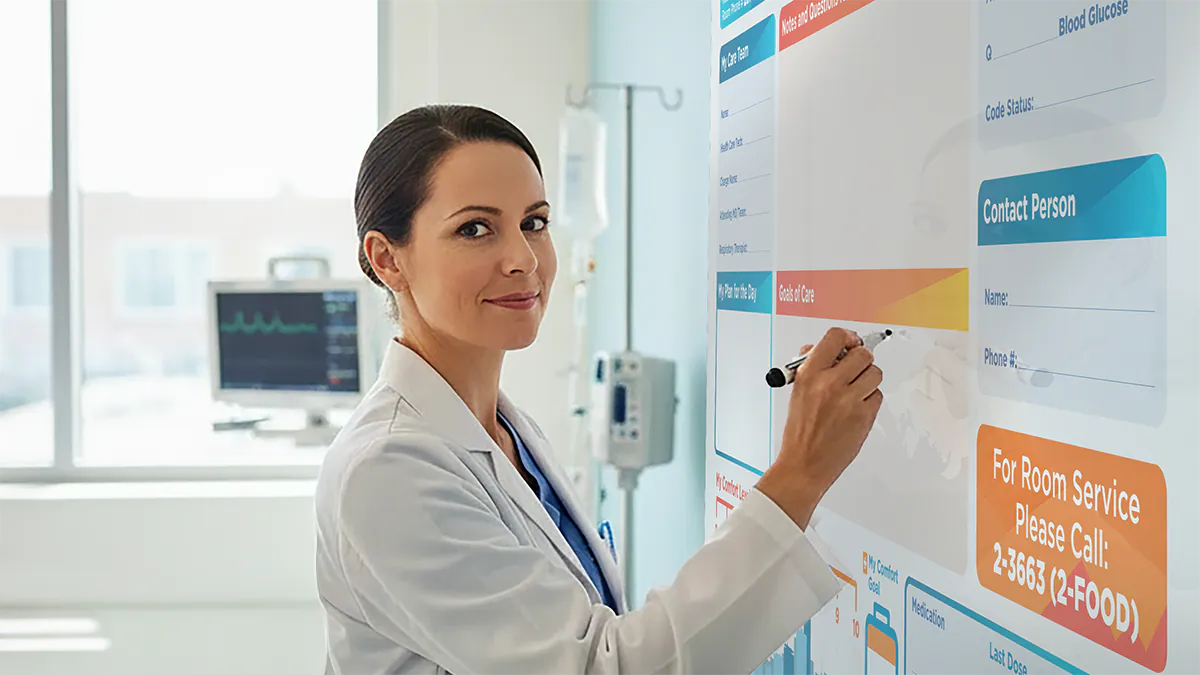
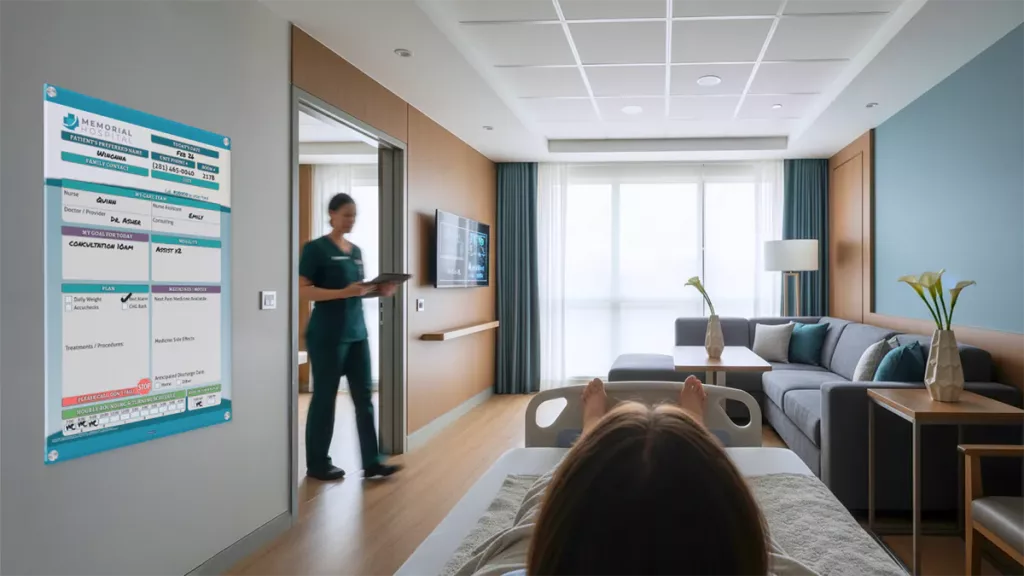
Bedside communication boards are patient-facing display tools placed in hospital rooms that provide real-time, at-a-glance information. Depending on the facility and workflow, they typically display care team names, daily goals, scheduled procedures, pain levels, dietary notes, and discharge planning milestones.
The role of visual communication in healthcare is well-established. Visuals can make the presentation of complex information easier to comprehend and more attractive. It is important to choose visuals that support the main message and have clear headings, labels, and captions for effective communication. When patients can see relevant information about their care without having to ask, their anxiety decreases, their sense of control increases, and their trust in the care team strengthens. Families and visitors benefit too—they arrive with fewer questions and feel more included in the care process.
From an operational standpoint, the advantages are just as clear. When care team names, patient goals, and key updates are visible on the board, staff spend less time fielding repetitive questions and more time on direct care. Bedside boards essentially function as a communication hub—keeping patients, families, and care teams aligned without requiring additional staff resources.
Customizable solutions allow facilities to tailor board layouts to fit specific departments, workflows, or patient populations, making them adaptable across a range of clinical environments. Bedside boards can be created to meet the specific needs of different departments or patient populations, ensuring that each solution is intentionally developed for its unique context.
Tip 1: Use Boards to Set and Communicate Daily Care Goals
One of the most impactful uses of a bedside board is documenting the patient’s daily care goal at the start of each shift. Something as specific as “Walk to the hallway twice today” gives patients a clear, achievable focus and signals that their care team has a structured plan. By making these goals visible, bedside boards help ensure that important care activities and outcomes actually happen as planned during the patient’s stay.
Goal-setting is not a soft intervention. Research consistently shows a link between informed, goal-oriented patients and higher satisfaction scores, better treatment compliance, and improved outcomes. Patient education tools help patients understand the risks and benefits of their care, improving health literacy and compliance. When a patient understands what they’re working toward—and can see that goal updated regularly—they become active participants in their recovery rather than passive recipients of care. Patients with better care experiences often have better health outcomes and are more likely to adhere to medical advice and treatment plans.
For nurses, this practice also supports better handoffs. When goals are visible on the board, incoming staff immediately understand the priorities for that patient without a lengthy verbal briefing. The result: improved staff collaboration and a more consistent care experience across shifts.
Tip 2: Display Care Team Information to Build Trust
Patients who don’t know who is responsible for their care tend to press the call light more frequently, feel more anxious, and report lower satisfaction. It’s a straightforward problem with a straightforward solution: put the care team’s names on the board.
Listing the names of the attending nurse, physician, and any aides on duty helps patients feel oriented and cared for. Physicians play a key role in patient care, and their visibility on patient engagement tools strengthens the patient-provider relationship and supports a holistic approach to care. It transforms an impersonal clinical environment into one where there are familiar faces and names—people who are accountable for their wellbeing. This kind of transparency is a foundational nurse-patient communication strategy that directly supports trust-building. Understanding the factors that affect patient satisfaction is crucial for any provider. Real-time feedback systems can capture patient sentiments immediately after visits, identifying areas for improvement. Higher patient satisfaction scores improve provider reputation and revenue, reducing patient leakage.
Beyond the emotional benefit, there’s an operational payoff. Studies have shown that patients who know who to expect—and when—use call lights less frequently. This frees up nursing staff to focus on higher-priority tasks and reduces the interruptions that fragment care delivery throughout a shift.
Tip 3: Incorporate Patient Preferences and Pain Levels
Every patient is different. Bedside boards give care teams a visible, standardized place to document those differences—communication preferences, language needs including translation services, dietary restrictions, pain levels, mobility limitations, and other individual needs that affect how care should be delivered. Language translation technology is essential to ensure all patients, regardless of linguistic background, can communicate effectively with their care team.
This level of personalization is at the heart of patient-centered care tools. Patient engagement leads to increased empowerment, improved convenience, and better health outcomes. When a new nurse enters the room and immediately sees that a patient prefers written instructions, has a latex allergy, and is currently at a pain level of 4, they can adjust their approach before saying a word. That kind of informed interaction reduces errors, builds confidence, and enhances the patient’s sense of being truly seen. Patient-centered care also involves actively involving patients and their families in care decisions, which improves health outcomes. Additionally, reducing patient wait times is crucial, as long wait times are a major source of frustration for patients.
The impact on satisfaction metrics is measurable. Hospitals using standardized communication boards have reported meaningful improvements in HCAHPS scores—the Hospital Consumer Assessment of Healthcare Providers and Systems survey used to benchmark patient experience across facilities. For administrators focused on performance benchmarking and regulatory compliance, this is a compelling reason to standardize bedside board use across units.
Tip 4: Use Boards as a Discharge Planning Tool
Discharge is one of the most stressful transitions a patient experiences. When it’s handled poorly—last-minute education, unclear next steps, insufficient preparation—it contributes to confusion, anxiety, and in many cases, preventable readmissions.
Bedside boards can play a significant role in smoothing this transition. By displaying anticipated discharge dates, upcoming tests, and patient education milestones from early in the stay, care teams give patients the mental runway they need to prepare. Patients who know their discharge timeline are more engaged in their recovery, more likely to ask relevant questions, and less likely to leave feeling unprepared. Scheduling follow-up appointments and providing appointment reminders at discharge are essential patient engagement tools that ensure continuity of care and reduce the risk of missed visits.
Digital intake and feedback systems further streamline check-ins and help measure patient satisfaction during the discharge process. Patient portals offer 24/7 access to medical records, lab results, appointment scheduling, and prescription refills, empowering patients to manage their care after leaving the facility. Additionally, wearable technology can track vital signs and feed data directly to providers, enabling proactive care and timely interventions post-discharge.
The operational benefits are equally significant. Discharge nurses spend less time on last-minute logistics when patients are already informed. Readmission rates drop when patients leave with a clear understanding of their care plan. Fewer readmissions translate directly to reduced operational costs—a key performance indicator for clinical managers and directors of nursing. This approach also aligns with industry standards around patient discharge communication, supporting broader compliance goals.
Tip 5: Involve Patients and Families in Board Updates
A bedside board used only as a one-way communication channel misses its full potential. The most effective implementations treat the board as a shared space—one where patients and families can contribute as well. Bedside boards support patient and family engagement by reinforcing communication, clarifying care plans, and encouraging active participation in the care process.
Inviting patients to add their preferred name, write down questions for the care team, or note concerns creates a visible signal that their voice matters. Families who arrive during a visit can see what’s been discussed, what’s upcoming, and where their loved one is in the care journey. This kind of inclusion reduces feelings of helplessness and disconnection that are common during hospitalization.
For patient engagement tools to be effective, HIPAA compliance, user-friendliness, and seamless integration with Electronic Health Records (EHRs) are essential. These features support secure communication and protect patient privacy. Increased efficiency from patient engagement tools also reduces administrative tasks and optimizes clinic workflows, allowing staff to focus more on direct patient care. Effective patient engagement tools include secure patient portals, mobile health apps, telehealth services, and automated communication systems. Automated communication can include AI-powered reminders for appointments and medication refills, supporting timely follow-up and adherence. Telehealth platforms offer convenient video consultations and remote monitoring for chronic conditions and specialist access. Direct patient data from wearables and portals enables accurate and personalized care delivery, supporting better outcomes and patient satisfaction.
The data supports this approach. Higher levels of patient engagement consistently correlate with shorter hospital stays, better adherence to post-discharge instructions, and stronger staff-patient relationships. Treating the bedside board as a collaborative tool—rather than a staff-only resource—is one of the simplest ways to shift toward a genuinely patient-centered care model.
How to Implement Bedside Boards Effectively
Rolling out bedside communication boards across a unit requires more than placing them on walls. At VisiCare, we are committed to improving patient care and communication by providing high-quality, modern patient engagement tools that enhance satisfaction and safety. Successful implementation starts with staff buy-in—particularly from clinical managers, directors of nursing, and frontline care teams who will be updating and referencing the boards daily.
A pilot program in a single department is the most practical starting point. This allows staff to test workflows, identify gaps, and build confidence before scaling across the facility. Standardizing what information appears on each board—while leaving room for customization based on patient needs—ensures consistency without rigidity.
Training should be brief and role-specific. Staff need to know not just how to update the board, but why it matters. Connecting the practice to patient satisfaction outcomes, reduced call light usage, and HCAHPS scores gives clinical staff a concrete reason to engage with the process consistently.
Choosing user-friendly, customizable boards that integrate seamlessly into existing workflows is critical to long-term adoption. For further guidance on supporting staff-patient communication, explore these resources from VisiCare: Nurse-Patient Communication Strategies That Drive Patient Satisfaction and 7 Ways Bedside Communication Transforms Patient Experience.
Measuring the Impact of Bedside Boards
Putting bedside boards in place is just your first step—and honestly, that’s the exciting part! What really makes the difference for your patients is measuring how these boards actually impact their experience and health outcomes. As a healthcare provider, you’ll want to go beyond those feel-good stories (though we love hearing those too) and dive into the real data that shows what’s working.
Here’s where you can start making a real difference: keep a close eye on your patient satisfaction scores—think HCAHPS and those post-discharge surveys that tell you how informed and supported your patients actually felt during their stay. But don’t stop there! We encourage you to gather direct feedback through comment cards, digital surveys, or those invaluable real-time rounding conversations. Trust us, these insights will show you exactly where your communication is hitting the mark and where you might need to fine-tune things a bit.
Now, here’s something really powerful you can track: how are your bedside boards actually helping patients stick to their treatment plans? Are your patients walking away with a clearer understanding of their daily goals? Can they better remember their care instructions and follow through on what you’ve recommended for after discharge? When you track these outcomes, you’re getting to the heart of what makes bedside boards truly valuable—they’re not just nice to have, they’re actively supporting better patient engagement and healthier outcomes.
We always tell healthcare teams that regularly reviewing these metrics is like having a compass for your communication strategy. It helps you make those smart, data-driven decisions that really matter, refine your approach, and make sure your bedside boards are doing exactly what you intended them to do. By embracing this kind of continuous improvement mindset and actively seeking out feedback, you’re not just enhancing care quality—you’re boosting patient satisfaction and achieving those better health outcomes that every patient deserves. And honestly? That’s what it’s all about.
Elevate Patient Experience, One Board at a Time
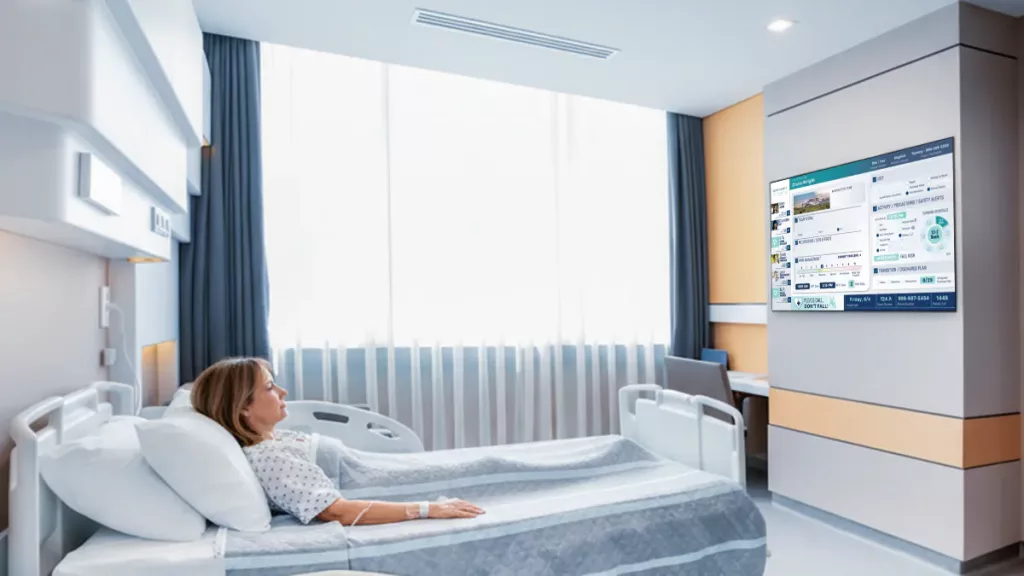
The five strategies covered here—daily goal-setting, care team visibility, patient preferences, discharge planning, and collaborative updates—represent a practical framework for using bedside boards to improve the patient experience across your facility. Bedside boards and digital patient engagement tools give patients more control over their healthcare experience, empowering them to participate actively in their care.
Ensuring patients are satisfied is crucial, as higher satisfaction leads to better health outcomes, increased retention, and a more positive environment for both patients and staff. There is also an opportunity for patients to provide feedback, which can help improve healthcare services and strengthen patient-provider relationships. Reminders and ongoing communication encourage patients to stay engaged and make healthier choices, both during their stay and after discharge, which helps improve health outcomes.
Personalized digital communications can be delivered across multiple channels, including email and text message, to reach patients wherever they are. Follow-up contacts after a healthcare visit provide the chance to reestablish and strengthen patient engagement. Language translation technology ensures every patient receives the same level of care, regardless of the language they speak. Digital automation has been proven to relieve staff burden and improve patient response in follow-up care. Additionally, consumer education provides patients with foundational knowledge about their health and available healthcare options.
None of these approaches require a major investment of time or budget. What they do require is consistency, standardization, and a genuine commitment to keeping patients informed and engaged throughout their stay.
Start by auditing your current communication approach. Where are the gaps? Are patients consistently aware of their care team? Do they know what to expect before discharge? Are their preferences documented and visible to every staff member who enters the room? Bedside boards can address each of these gaps with minimal disruption to existing workflows.
To see how VisiCare’s customizable bedside board solutions can be tailored to your facility’s specific needs, contact us today for a needs analysis.
Frequently Asked Questions
How do bedside communication boards improve patient satisfaction?Bedside boards keep patients informed, reduce uncertainty, and give them a sense of control over their care. They can also be used to send text messages for appointment reminders or follow-up communication, ensuring patients and doctors stay connected. When patients know who their nurse is, what their goals are for the day, and when they’re expected to be discharged, they feel more engaged and supported—factors that directly improve satisfaction scores such as HCAHPS. Effective patient engagement contact is vital to post-discharge follow-up care, and bedside boards make it impossible for patients to miss important updates. Reducing patient wait times is also crucial, as long wait times are a major source of frustration for patients. Patients with better care experiences are more likely to adhere to treatment plans and recommend healthcare practices to others. Word-of-mouth and online reviews (mouth) play a significant role in building a healthcare provider’s reputation and patient acquisition.
What should be on a hospital bedside board?Most effective bedside boards include care team names, daily patient goals, current pain levels, patient preferences or special notes, scheduled procedures or tests, and discharge planning milestones. Incorporating video content for patient education and communication can further enhance understanding and engagement. The exact layout can be customized based on the department and patient population. Remember, reinforcing key information helps ensure patients retain important details for their care.
How do you get nursing staff to consistently use bedside boards?Consistency improves significantly when staff understand the operational and patient experience benefits. Connecting board updates to reduced call light usage, better shift handoffs, and improved satisfaction scores gives nurses a clear rationale. Bedside boards also help doctors and staff meet patients’ needs more effectively, supporting timely follow-up and personalized care. Starting with a pilot program and gathering early feedback also helps build staff confidence and ownership.
Are bedside communication boards cost-effective for hospitals?Yes. Bedside boards are a low-cost intervention with measurable returns. There is a variety of patient engagement tools available, including digital and traditional options, to suit different facility needs. Reduced readmissions, fewer repeat questions, more efficient discharge processes, and higher HCAHPS scores all contribute to a positive return on investment—making them one of the most cost-effective patient experience tools available.