

Where Health Meets Space in Wellness Design
Patients in rooms with natural light leave hospitals sooner. Staff working in well-designed environments make fewer errors. These aren’t design aspirations—they’re documented outcomes backed by decades of evidence-based research. According to The Center for Health Design, thoughtfully designed healthcare environments can reduce patient stress, accelerate recovery, and significantly improve clinical outcomes. Yet many hospitals continue to treat spatial design as a finishing touch rather than a foundational strategy.
Good design supports health and well-being for all people by considering the physical, mental, and emotional effects on building occupants and the surrounding community. By prioritizing these factors, wellness design creates a positive impact on overall wellness, fostering environments that benefit everyone within and around the facility.
For hospital administrators and clinical managers, this gap represents both a risk and an opportunity. Wellness interior design—the practice of creating health-conscious spaces that actively support physical, psychological, and emotional wellbeing for building occupants and the broader community— is no longer a luxury reserved for premium facilities. It’s a strategic, operational investment with measurable returns and a positive impact on both individual and community health.
This post breaks down the key disciplines shaping wellbeing design, practical room-level strategies, the growing importance of interactive patient care environments, and how administrators can measure the real-world impact of these decisions.
What Is Wellness Interior Design in Healthcare?
Traditional interior design focuses on aesthetics and functionality. Wellness interior design goes further—it treats every spatial decision as a health intervention. Lighting, layout, acoustics, air quality, material choices, and color palettes—each carries measurable consequences for the people living and working within that space.
The concept of “design for wellbeing” recognizes that the built environment influences biological, psychological, and behavioral responses. For patients, this might mean the difference between a restful night’s sleep and fragmented recovery. For clinical staff, it can determine whether a 12-hour shift ends in clarity or exhaustion. Achieving balance and beauty in these spaces is essential, as thoughtful design elements can foster a sense of equilibrium and support well-being. Perception and understanding of how these elements interact are key to creating environments that positively impact comfort, happiness, and health.
This approach draws on evidence-based design (EBD)—a methodology grounded in healthcare research that informs decisions about spatial planning, material selection, and environmental systems. The growing EBD evidence base has shifted wellness interior design from intuitive practice to clinical discipline, giving administrators the data they need to justify investment and guide implementation. Frameworks like the WELL Building Standard provide measurable technical parameters to certify wellness-focused spaces. The WELL Building Standard is a holistic, human-centric approach to human health and wellness in the built environment.
The Disciplines That Shape Health-Conscious Spaces
Effective wellbeing design doesn’t happen in silos. It requires multiple disciplines working in coordination, each contributing a distinct lens to the overall environment. Designers—including architects and interior designers—play a crucial role in shaping wellness-oriented spaces, and collaborative design processes are essential for achieving holistic outcomes. Technologies such as generative AI tools and interactive systems are transforming wellness design by streamlining workflows, enabling greater personalization, and fostering innovation.
The ongoing development and growth in wellness-focused design disciplines reflect increasing demand for environments that support health, sustainability, and community wellbeing.
Architecture & Layout
Spatial flow has a direct impact on staff efficiency. Poor layout forces unnecessary movement, increases fatigue, and creates bottlenecks during high-pressure moments. Architecture that places nursing stations centrally, reduces corridor distances, and separates high-traffic clinical zones from quieter recovery areas can measurably cut staff travel time and cognitive load.
The architecture of buildings can also promote sustainability and well-being by incorporating natural building materials that are environmentally friendly and durable. There is a growing trend of integrating flexible spaces in building designs to accommodate various physical, emotional, or mental needs, supporting comfort and inclusivity for all occupants.
Interior Design
Color, texture, and material choices influence patient anxiety and recovery speed. Designing interior spaces that intentionally support well-being is essential for promoting both physical and mental health. Warm neutrals and soft greens tend to lower perceived stress. Harsh fluorescent lighting and institutional palettes can heighten disorientation, particularly in elderly or post-surgical patients. Evidence-based color application—calibrated to specific spaces and patient populations—is a relatively low-cost intervention with disproportionate impact.
Flexible furniture plays a key role in creating adaptable, healthy environments, allowing interior spaces to be easily reconfigured for comfort, sensory needs, and functional flexibility.
Good design also supports food consumption on-site by providing healthy choices and creating spaces for food preparation and social interaction, as seen in evolving cafeteria designs that feature diverse elements and flexible furniture.
Lighting Design
Natural light regulates circadian rhythms, supports immune function, and reduces the need for sedative medications in some patient groups. Studies cited by The Center for Health Design show that patients in naturally lit rooms report higher satisfaction and recover faster. Thoughtful lighting design can enhance the beauty of healthcare spaces and support productivity for both patients and staff by creating an environment that promotes alertness and comfort. For nursing stations, high-quality task lighting reduces eye strain and medication errors during documentation.
Acoustic Engineering
Hospitals are among the noisiest environments people inhabit. Noise disrupts patient sleep, elevates stress hormones, and impairs staff concentration. The mental and emotional impact of acoustics on occupants is significant, as environments that reduce overstimulation can support mental clarity and emotional wellbeing. Acoustic panels, sound-absorbing materials, and strategic spatial separation between noisy and quiet zones are practical tools that directly address these clinical risks.
A clear understanding of how speech, noise, and sound are perceived within our environments is essential for effective, human-centered wellness design.
Poor acoustical performance reduces productivity, increases blood pressure, negatively impacts sleep, and directly impacts overall wellness.
Biophilic Design
Access to nature—whether through outdoor views, living walls, natural materials, or water features—consistently reduces psychological stress markers in both patients and staff. Biophilic elements aren’t decorative additions; they’re evidence-backed interventions that support healing, enhance overall wellness, and promote a healthier life by fostering a deeper connection to nature.
Each discipline contributes uniquely to the patient and staff experience. When these elements are designed together with a shared wellbeing objective, the cumulative effect far exceeds what any single discipline can achieve in isolation.
Incorporating healthy elements such as biophilic design and natural daylighting into building designs has a positive impact on overall wellness, supporting both physical and emotional health for all occupants.
Room-by-Room Design Strategies for Wellbeing
Wellness interior design principles apply differently across healthcare spaces. It is essential to create spaces that are intentionally designed to support the well-being, comfort, and health of all occupants. Here’s how to implement them where they matter most. Integrating design strategies and engaging clients in these processes is crucial to enhance individual health inside the facility.
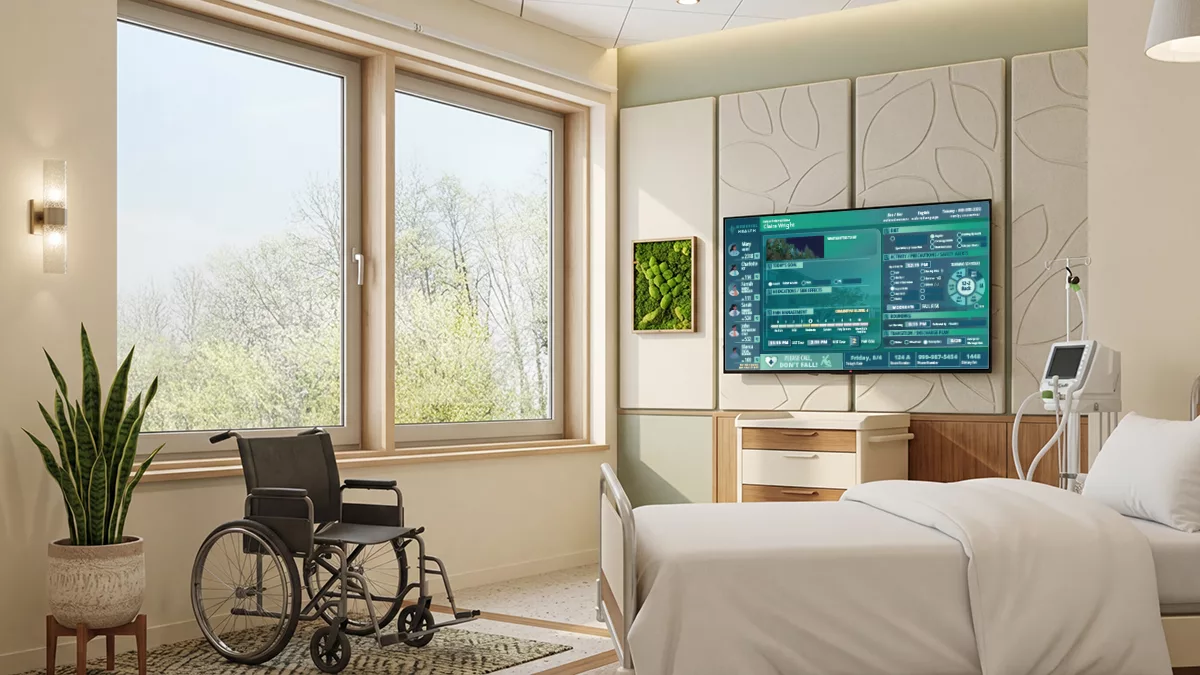
Patient Rooms
- Prioritize natural light access and install circadian-friendly lighting systems that shift in color temperature throughout the day to support sleep and recovery.
- Apply evidence-based color palettes—soft blues, greens, and warm neutrals—to reduce patient anxiety and create a sense of calm.
- Design for dignity and control: giving patients the ability to adjust lighting, temperature, and window coverings supports psychological safety and autonomy.
- Minimize noise through acoustic ceiling panels, solid-core doors, and soft furnishings that absorb sound.
- Introduce biophilic elements—views of greenery, natural wood finishes, or living plants—where possible.
- Address air quality in patient rooms by improving indoor air quality (IAQ) through air purification, monitoring CO2 levels, and implementing a multifaceted approach that provides high-quality outdoor air while minimizing the intrusion of dirt, particles, and other pollutants. This focus on air quality supports overall occupant well-being and aligns with wellness design best practices.
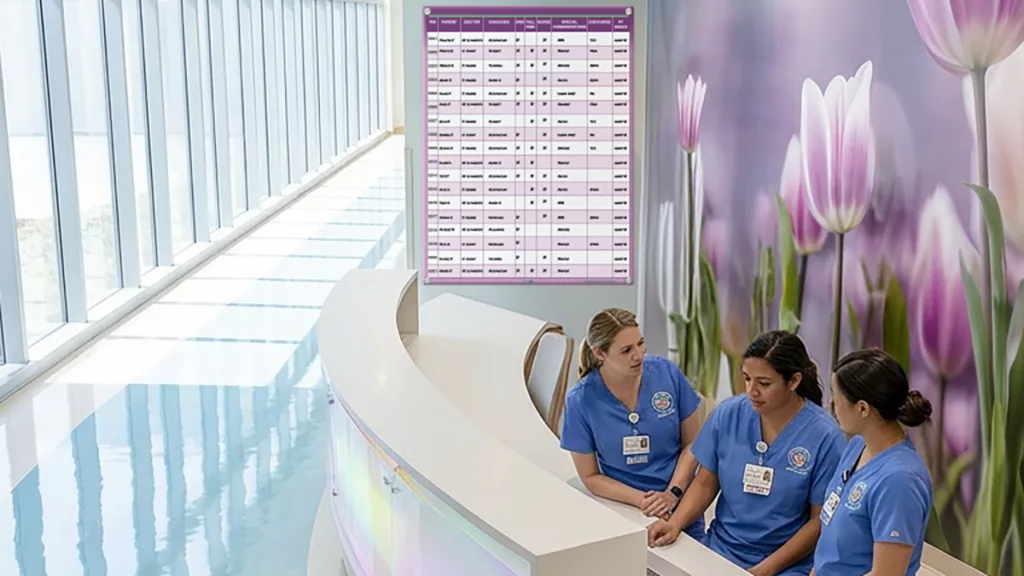
Nursing Stations & Staff Areas
- Apply ergonomic design to workstations and seating to reduce physical strain during extended shifts.
- Create dedicated restorative break spaces—separate from clinical areas—where staff can genuinely decompress. These spaces reduce burnout and contribute to lower turnover rates.
- Use acoustic buffering to reduce ambient noise at stations, supporting focus during medication management and documentation.
Waiting & Communal Areas
- Design clear wayfinding systems using visual cues, color coding, and signage to reduce navigation anxiety—a frequently underestimated source of visitor stress. Communal areas play a vital role in fostering a sense of community and inclusion, supporting social well-being and engagement among patients, families, and staff.
- Offer flexible seating arrangements that accommodate patients with mobility challenges, families with children, and individuals requiring privacy. Designing flexible spaces in communal areas is essential to accommodate diverse physical, emotional, and mental needs, promoting well-being and comfort for all occupants.
- Incorporate biophilic elements and natural light to ease patient and visitor stress during what are often emotionally difficult moments.
Interactive Patient Care: Designing Spaces That Engage
Interactive patient care (IPC) is an approach in healthcare that emphasizes providing entertainment and educational resources to the patient bedside via an in-room display.
An interactive patient care environment goes beyond clinical functionality—it gives patients meaningful agency over their own care experience. These are spaces designed to inform, involve, and empower rather than passively contain.
Practical design features that support this approach include:
- In-room technology integration: Smart lighting, climate control, and entertainment systems that patients can manage independently support a sense of autonomy and reduce feelings of helplessness. IPC solutions can also integrate with traditional EMR and hospital IT systems, providing patient-centric applications that help hospitals meet service and quality requirements.
- Visual communication tools: Whiteboards, digital displays, and care schedule boards keep patients informed about their treatment plan, reducing anxiety driven by uncertainty.
- Modular furniture and adaptable layouts: Spaces that accommodate family members as active participants in care—rather than visitors on the periphery—improve patient emotional support and treatment adherence.
The connection between these design features and patient satisfaction scores is well established. A hospital redesign project at Palomar Medical Center in California, developed using evidence-based design principles, reported significant improvements in patient satisfaction, reduced patient falls, and a measurable decrease in average length of stay following implementation. These outcomes translated directly into operational and financial benefits for the facility. Interactive Patient Care improves satisfaction and outcomes for both patients and hospitals, as patients experience improved outcomes through better education and empowerment to effect the care experience. Hospitals and caregivers can also improve their delivery of more efficient and targeted care to their patients through IPC solutions.
Interactive patient care environments are not a niche consideration—they are a strategic response to increasing patient expectations and the growing emphasis on person-centered care models.
Projections for the growth of the Interactive Patient Care market are optimistic, driven by increasing demand from the growing elderly and newly insured populations. The evolution of IPC is expanding the engagement footprint beyond the bedside to include the entire continuum of a patient’s care, primarily adding the home. As new technologies such as AI tools and interactive systems continue to integrate with existing hospital infrastructure, they will play a key role in shaping the future of wellness design and advancing healthier, more sustainable healthcare environments.
Measuring the Impact: Why Wellbeing Design Pays Off
Hospital administrators need more than qualitative arguments to justify design investment. Fortunately, wellness interior design delivers measurable outcomes across key performance indicators. Good design not only supports health and well-being by incorporating natural light, air quality, thermal comfort, acoustics, and biophilic elements, but also encourages food consumption on-site by providing healthy choices and dedicated spaces for food preparation and social interaction, fostering a sense of inclusion and overall wellness.
Relevant metrics to track include:
- Patient satisfaction and HCAHPS scores: Environmental factors—including noise levels, lighting, and room cleanliness—are directly assessed in standardized patient satisfaction surveys. Wellbeing design improvements consistently correlate with score increases.
- Staff retention and absenteeism: Poorly designed work environments are a documented contributor to burnout. Ergonomic, restorative staff spaces reduce physical strain and emotional exhaustion, supporting retention.
- Average patient length of stay: Research from The Center for Health Design links natural light exposure, reduced noise, and biophilic elements to shorter recovery times—a metric with direct cost implications.
- Incident and error rates: Environmental distractions, poor lighting, and confusing layouts all contribute to clinical errors. Addressing these factors through design reduces preventable incidents.
The common objection—budget constraints—deserves a direct response. Health-conscious spaces do require upfront investment. But when assessed against the cost of staff turnover, extended patient stays, low satisfaction scores, and preventable incidents, the ROI case becomes compelling. Many evidence-based interventions, such as acoustic treatments, circadian lighting upgrades, and ergonomic workstations, can be implemented incrementally without full-scale renovation.
Frequently Asked Questions
How does interior design affect patient recovery?
Spatial design influences multiple biological and psychological factors tied to recovery, including sleep quality, stress hormone levels, circadian rhythm regulation, and sense of control. Evidence-based design interventions—such as natural light access and noise reduction—have been shown to reduce length of stay and improve clinical outcomes.
What is evidence-based healthcare design?
Evidence-based healthcare design (EBD) is an approach to planning and designing healthcare facilities that uses credible research findings to make informed decisions. The goal is to create environments that measurably improve patient outcomes, staff performance, and operational efficiency.
Can small facilities benefit from wellness interior design?
Yes. Many wellbeing design principles can be applied at low cost—color palette adjustments, acoustic panels, biophilic elements, and improved wayfinding are all scalable to facilities of any size. The returns, including reduced staff burnout and improved patient satisfaction, apply regardless of facility scale.

Design Is a Clinical Decision
Wellness interior design is not a question of aesthetics—it’s a question of outcomes. Every layout decision, material choice, and lighting specification either supports or undermines the health of the people inside those walls. For administrators and clinical managers focused on patient satisfaction, staff retention, and operational efficiency, the design environment is a lever that remains underutilized in many facilities.
The path forward doesn’t require a complete overhaul. It starts with a design audit of your current facility, an honest assessment of where environmental factors are limiting clinical performance, and a willingness to engage a multidisciplinary team with expertise in evidence-based healthcare design.
Ready to explore what wellbeing design could achieve in your facility? Contact our team to learn how tailored, health-conscious design solutions can be integrated into your next upgrade or renovation project.