


Behavioral Health Guidelines for Nurses: A Comprehensive Guide to Improve Patient Safety
Disclaimer: VisiCare is not a medical provider. The following information is intended for educational and reference purposes only and represents non-medical opinions. It does not constitute legal or medical advice. Always consult official state and federal resources for current regulations.
The landscape of behavioral health is governed by a complex web of regulations that can vary significantly from one state to another. For nurses on the front lines, staying compliant isn’t just about checking boxes—it’s about ensuring patient safety in high-risk environments. Navigating this maze of rules, which dictate everything from facility design to staffing ratios, can be overwhelming.
This guide serves as a reference point for nurses and administrators. We will break down common themes in behavioral health regulation, highlight specific examples from key states, and provide actionable insights. Understanding these behavioral health guidelines for nurses is the first step toward maintaining safer, more compliant spaces for both patients and staff.
Universal Themes in Behavioral Health Guidelines for Nurses to Improve Patient Safety
While specific laws differ, most state regulations are built on the same foundational pillars. For nurses, these aren’t just abstract requirements—they represent the core elements shaping your daily work routine, ensuring your actions directly support patient safety and well-being.
To explore how these themes play out in real-world practice, the VisiCare blog “Beyond Capacity: Managing Rising Behavioral Health Cases in Behavioral Health Hospitals” dives into the practical challenges nurses face as behavioral health caseloads increase. The blog discusses strategies for staying compliant, managing documentation, and maintaining patient-centered care when demand is high—all critical for front-line staff navigating the pressures of today’s behavioral health landscape.
1. Facility Licensing and Standards: Human Factors and Health Care Environment
Before a facility can open its doors, it must meet stringent licensing standards—a process detailed in “Beyond Blueprints: A Guide to Healing Hospital Design”. This blog explains how intentional facility design, environmental safety audits, and ongoing inspections all support nurses’ ability to provide care in safe, regulatory-compliant environments. Nurses working in well-designed spaces find it easier to identify possible risks, respond to patient needs, and perform daily rounds with confidence that safety and compliance are built into their workspaces.
2. Patient Rights and Preventing Patient Harm in Behavioral Health Nursing
Protecting patient rights is not just a regulatory checkbox but an everyday practice. Nurses champion confidentiality, dignity, and due process, particularly when supporting patients experiencing crisis or involuntary treatment. Guidance on balancing empathy with boundaries and compliance is featured in “More Than Words: Clearer Communication in Mental Health”, where real techniques for building trust, de-escalating anxiety, and maintaining professional ethics are outlined.
3. Incident Management and Reporting to Reduce Patient Harm
Robust incident management and prompt reporting are a vital part of risk mitigation. As highlighted in VisiCare’s resources on behavioral health case management, effective incident tracking helps nurses and clinical teams respond swiftly to sentinel events or potential safety breaches. Tools, checklists, and team debriefs streamline this responsibility, ensuring reporting doesn’t become a barrier to direct care but rather reinforces a culture of transparency and patient safety.
4. Staffing and Training: Enhancing Health Care Competencies to Improve Patient Safety
Appropriate staffing ratios and ongoing training are central themes in both regulations and the latest nurse-centered best practices. Realistic caseloads, outlined in “Beyond Capacity,” reduce burnout and allow for continuous upskilling, from handling complex patient behavior to learning the latest in trauma-informed care techniques. Learning modules, peer-led workshops, and scenario-based training keep nurses prepared for the evolving realities of behavioral health.
5. Crisis Prevention and Intervention: Applying Human Factors to Improve Patient Safety
De-escalation and crisis prevention are a daily reality in mental health nursing. The “More Than Words” blog provides nurses with actionable scripts and approaches to navigate high-stress moments, with an emphasis on communication that diffuses tension and prevents the need for restraint or seclusion—key mandates in all state and federal patient safety guidelines.

A Snapshot of State Regulatory Bodies: Health Care Systems Addressing Patient Safety and Behavioral Health
How these themes are implemented depends on the state’s regulatory structure. Each agency—whether Texas HHS, California DHCS, or Florida DCF—tailors standards to local contexts, but the nurse’s role as advocate, documentation expert, and patient safety steward remains consistent. Real-world stories and practical insights within these agencies’ purview are showcased in our blogs, offering lessons learned that you can use wherever you practice.
For example, “Designing a Safer Emergency Department” explores how regulatory compliance intersects with frontline experience, showing how improved physical layouts, signage, and clear observation lines make it easier for nurses to monitor at-risk patients—an everyday challenge in high-acuity environments.
- Texas: The Texas Health and Human Services (HHS) commission regulates facilities, focusing on licensure, staffing requirements, and physical plant standards. Professional licensing is handled separately by the Texas Behavioral Health Executive Council.
- California: A dual-agency approach is used here. The Department of Health Care Services (DHCS) oversees behavioral health programs, while the Department of Public Health (CDPH) manages facility licensing and certification.
- Massachusetts: The Massachusetts Department of Mental Health (DMH) is a standalone agency dedicated to adults with serious mental illness and children with serious emotional disturbance. It sets distinct standards for community programs and inpatient facilities.
- Minnesota: The Minnesota Department of Human Services (DHS) oversees both mental health and substance use disorder services. Its policies often emphasize integrated care models and recovery-oriented approaches.
- Virginia: The Virginia Department of Behavioral Health and Developmental Services (DBHDS) is another standalone agency. It licenses providers and sets standards with a strong focus on community-based care, ensuring compliance with both state and federal laws.
- Florida: The Florida Department of Children and Families (DCF) manages the state’s mental health programs and establishes the rules for service delivery, including the licensing of both substance abuse and mental health treatment facilities.
Deep Dive: New York’s Focus on Patient Safety, Facility Design, and Human Factors in Behavioral Health
New York remains a leading example of rigorous mental health facility regulation. The state’s focus on ligature risk reduction and visible, accessible nursing stations, as detailed in both the healing hospital design and safer ED design blogs, mirrors the daily experience of nurses navigating the balance between patient privacy and supervision. Whether you’re advocating for safer layouts or ensuring your patient area is free from hazards, these insights show how environmental safety and human factors are woven into your daily workflow.
Legal and Professional Conduct: Guidelines to Prevent Patient Harm and Ensure Patient Safety
- The NY SAFE Act: This law includes a requirement for certain mental health professionals to report if they believe a patient is likely to cause serious harm to themselves or others.
- Discharge Protocols: State guidance is moving toward making it mandatory for hospitals to ensure patients are stable before discharge and to consider a patient’s full history in that decision.
Facility Design and Environmental Safety: Incorporating Human Factors to Improve Patient Safety
New York places a heavy emphasis on how the physical environment impacts patient safety.
- Ligature Risk Reduction: OMH guidelines mandate comprehensive risk assessments to identify and remove ligature and self-harm risks. This is especially critical in areas where behavioral health patients may receive care, including emergency departments and ICUs.
- Nursing Station Visibility: The guidelines require that nursing stations have an unobstructed view and clear line of sight to patient areas, making this a regulatory requirement, not just a design preference.
Actionable Insights for Nurses to Improve Patient Safety and Reduce Patient Harm
Translating these complex rules into daily practice is where nursing compliance truly happens.
- Know Your Regulatory Body: The first step is to identify your state’s specific oversight agency. Is it the Department of Health, or a dedicated Office of Mental Health? Bookmark their website and familiarize yourself with their resources.
- Become an Environmental Scanner: As the first line of defense, nurses should get in the habit of constantly scanning the environment. Look for potential hazards in patient rooms, bathrooms, and common areas that could violate licensing codes or pose a safety risk.
- Documentation is Your Defense: In the world of regulation, if it wasn’t documented, it didn’t happen. Accurate, timely, and detailed charting of patient observations, safety checks, and de-escalation attempts is your best tool for demonstrating nursing compliance and improving patient safety.
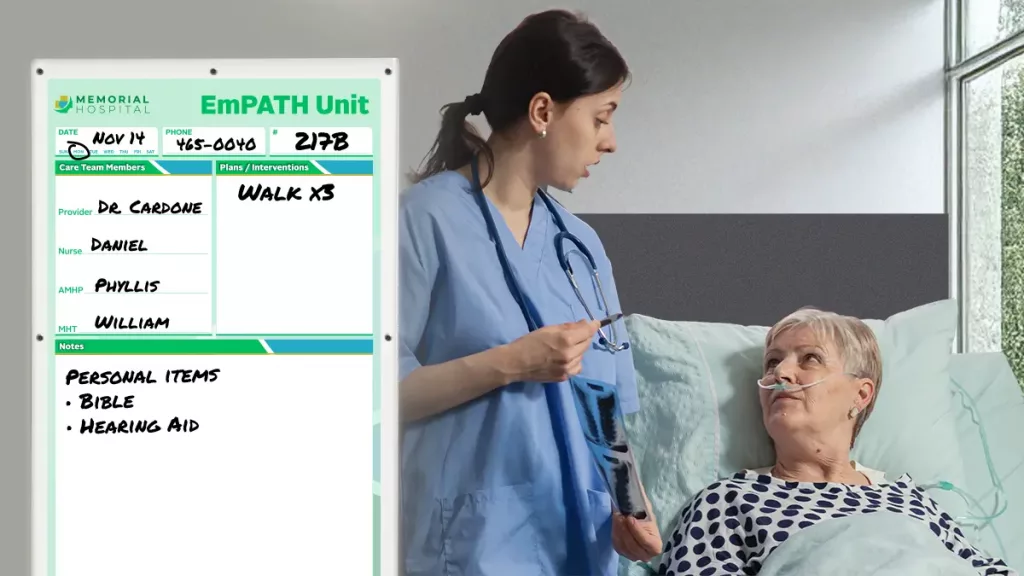
- Advocate for Safer Design: Use your knowledge of these behavioral health guidelines for nurses to advocate for safer work environments. If poor sightlines from a nursing station make monitoring difficult, or if a lack of proper visual communication tools like patient boards creates confusion, speak up. Your expert perspective is essential for driving meaningful change.
A Commitment to Patient Safety and Reducing Harm in Behavioral Health Nursing
While behavioral health guidelines for nurses vary by zip code, their goal is universal: protecting vulnerable patients. Understanding these regulations empowers nurses to provide better care, protect their professional license, and maintain their facility’s good standing.
Is your facility up to date with the latest healthcare safety standards? To find the specific regulations for your area, contact your state’s department of health or human services and ask for the division responsible for behavioral health licensing.