
How Patient Engagement Tools Are Revolutionizing Healthcare
In any healthcare setting, clear communication is the bedrock of patient safety, satisfaction, and staff efficiency. For nurses on the front lines and administrators managing operations, the ability to convey information effectively is not just a soft skill—it’s crucial for career success and organizational health. When patients feel heard and informed, they become active partners in their care, leading to better outcomes. This is where patient communication boards and other communication boards are making a significant impact.
This post will explore how modern technologies, including patient communication boards, are transforming the patient experience and enabling better patient communication and patient education. We will cover the evolving role of patient engagement, identify the top tools making a difference in patient centered care, see how they contribute to efforts to increase patient satisfaction, and analyze the return on investment for hospital administrators focused on improving patient care.
The Role of Patient Engagement in Modern Healthcare
Patient engagement has moved from a “nice-to-have” concept to a core strategy for successful healthcare delivery. It refers to the process of involving patients in their own care, from understanding their diagnosis to making informed decisions about their treatment. Engaged patients are more likely to adhere to treatment plans, report changes in their condition, and express higher satisfaction with their care.
For hospitals, higher engagement translates directly to improved patient survey scores, which influence reimbursements and public reputation. These patient experience enhancements also foster a culture of transparency and trust, reducing the likelihood of medical errors and malpractice claims. As healthcare becomes more consumer-driven, providing a positive and empowering patient experience is a key differentiator. Effective patient communication is the engine that drives this engagement, and modern tools like patient communication boards provide new and better ways to facilitate it.
Why Is Effective Communication Important to Patient Care Career Success?
Effective communication is a critical factor in career success, as it enhances collaboration, builds trust, and reinforces leadership abilities. In the context of healthcare, clear and empathetic communication not only improves the patient experience but also drives team performance and cohesion. Professionals who can articulate ideas, share knowledge, and actively listen are better equipped to address challenges, align with organizational goals, and inspire confidence among colleagues. Furthermore, as modern tools continue to revolutionize communication, those who adapt and leverage these innovations are more likely to differentiate themselves and thrive in a competitive, consumer-driven environment.
Top Tools for Patient Experience in Hospitals
The market is filled with solutions designed to improve communication, but a few stand out for their effectiveness in a hospital environment. These patient-centered care tools bridge the gap between providers and patients, ensuring information is both accessible and easy to understand.
1. Bedside Communication Boards:
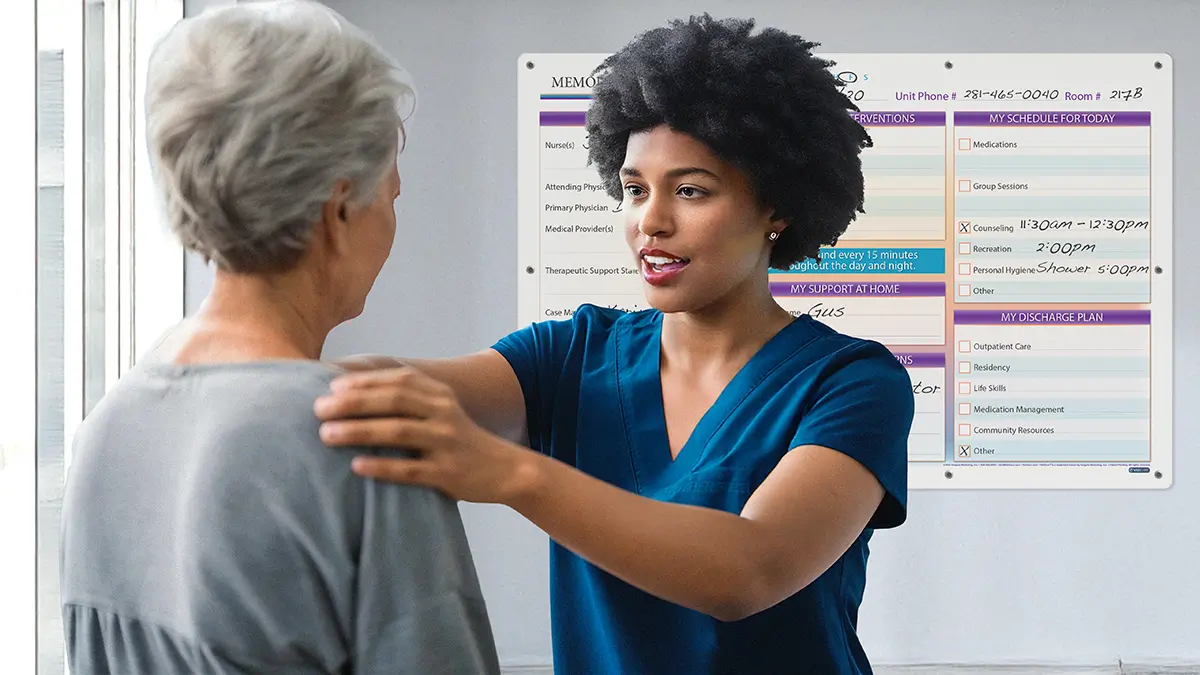
A prime example of effective patient communication boards and communication boards in healthcare, these simple yet powerful whiteboards in patient rooms are a central hub for critical information. They allow care teams to clearly display the patient’s name, the names of their nurses and doctors, daily goals, medication schedules, and planned tests. These boards empower patients and their families by providing a constant, reliable source of information, which reduces repetitive questions and patient anxiety. For nurses and physicians, they streamline handoffs and ensure the entire care team is aligned, supporting better care coordination.
2. Digital and Interactive Whiteboards:
Taking the traditional whiteboard a step further, digital boards integrate with the hospital’s Electronic Health Record (EHR) system. They can automatically update with real-time information, display educational videos for patient education, and even allow patients to provide feedback or make non-urgent requests. These interactive systems offer a more dynamic and personalized experience, one of the most impactful patient experience enhancements for a tech-savvy patient population.
3. Patient Portals and Mobile Apps:
Patient portals give individuals secure access to their health information, lab results, and appointment schedules from their own devices. Many hospitals are also developing mobile apps that provide campus maps, pre-registration capabilities, and direct messaging with care teams. These tools extend engagement beyond the hospital walls, promoting continuous and convenient communication that helps identify and address care gaps.

How Care Coordination Reduce Nurse Burnout
Nurse burnout is a critical issue facing the healthcare industry, driven by heavy workloads, administrative tasks, and emotional stress. Patient communication boards and other patient engagement tools can significantly alleviate some of these pressures and form the basis of effective patient communication strategies.
When patients are well-informed through a communication board or a digital portal, they ask fewer routine questions. This frees up valuable nursing time that can be redirected to more critical care tasks. Clear patient communication boards reduce misunderstandings and the need for repeated explanations, which can be a major source of frustration for both nurses and patients.
Furthermore, these tools facilitate smoother shift changes and team collaboration. A nurse coming on duty can quickly get up to speed by looking at a patient’s communication board, ensuring continuity of patient care without lengthy verbal reports for every detail. By streamlining communication and empowering patients to be more self-sufficient, these tools help create a more manageable and less stressful work environment for nursing staff. This not only improves job satisfaction but is also a key factor in career longevity and success.
ROI of Patient Engagement Tools for Administrators
For hospital administrators, any investment must demonstrate a clear return on investment (ROI). The benefits of patient communication boards and other patient engagement tools extend beyond goodwill and touch key financial and operational metrics, making them vital patient satisfaction solutions.
First, improved patient satisfaction, driven by better communication, leads to higher patient survey scores. As these scores are tied to Medicare and Medicaid reimbursements, a small improvement can result in significant financial gains. Satisfied patients are also more likely to recommend the hospital to others, boosting patient volume.
Second, enhanced communication reduces the risk of adverse events and medical errors. Miscommunication is a leading cause of preventable mistakes in hospitals. Tools like patient communication boards that standardize information transfer can lower the incidence of these costly errors, leading to reduced liability and improved patient safety metrics.
Finally, by reducing nurse burnout, hospitals can improve staff retention. The cost of recruiting, hiring, and training a new nurse is substantial. Investing in tools that make a nurse’s job more manageable is a direct investment in retaining experienced, valuable staff. The operational efficiency gained from streamlined communication also means that staff can handle their responsibilities more effectively, optimizing resource allocation across the facility.

Patient Communication for Closing Care Gaps
The shift toward patient centered care is fundamentally changing how hospitals operate. Patient communication boards, from simple whiteboards to integrated digital platforms, are at the forefront of this revolution. They empower patients, support nurses, and provide a strong return on investment for administrators.
For nurses, mastering these tools and the communication strategies they enable is a pathway to greater efficiency and career satisfaction. For administrators, they are a proven method for improving patient care, boosting patient satisfaction, and building a more resilient and effective workforce. By embracing these technologies, healthcare organizations can create a more collaborative and transparent environment that benefits everyone involved.