

How physical design choices influence clinical outcomes. You will learn how light, color, acoustics, and inpatient room layout affect recovery. You will also see how communication tools—including medical dry erase boards and nurse communication boards—function as patient safety infrastructure, not just conveniences. And you will find practical, scalable patient room solutions that hospital leaders can act on today.
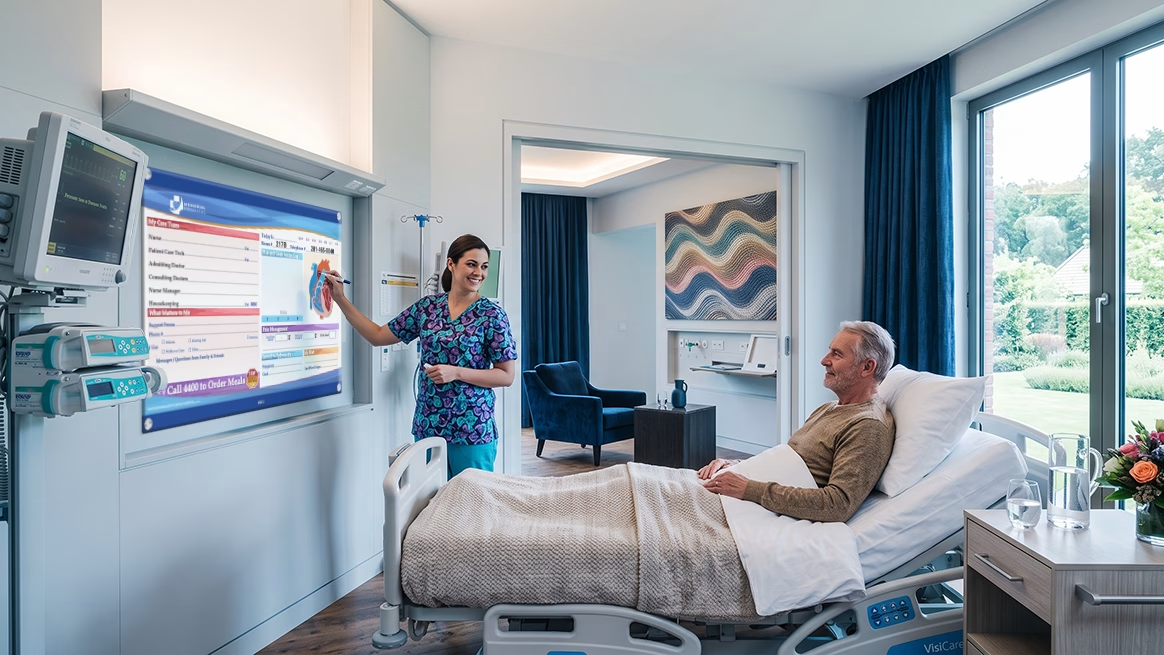
A board built for a med-surg floor looks nothing like what an ICU or orthopedics unit actually needs. Yet many hospitals routinely deploy the same generic layout across every room, every unit, every floor — and then wonder why boards go stale by mid-shift.
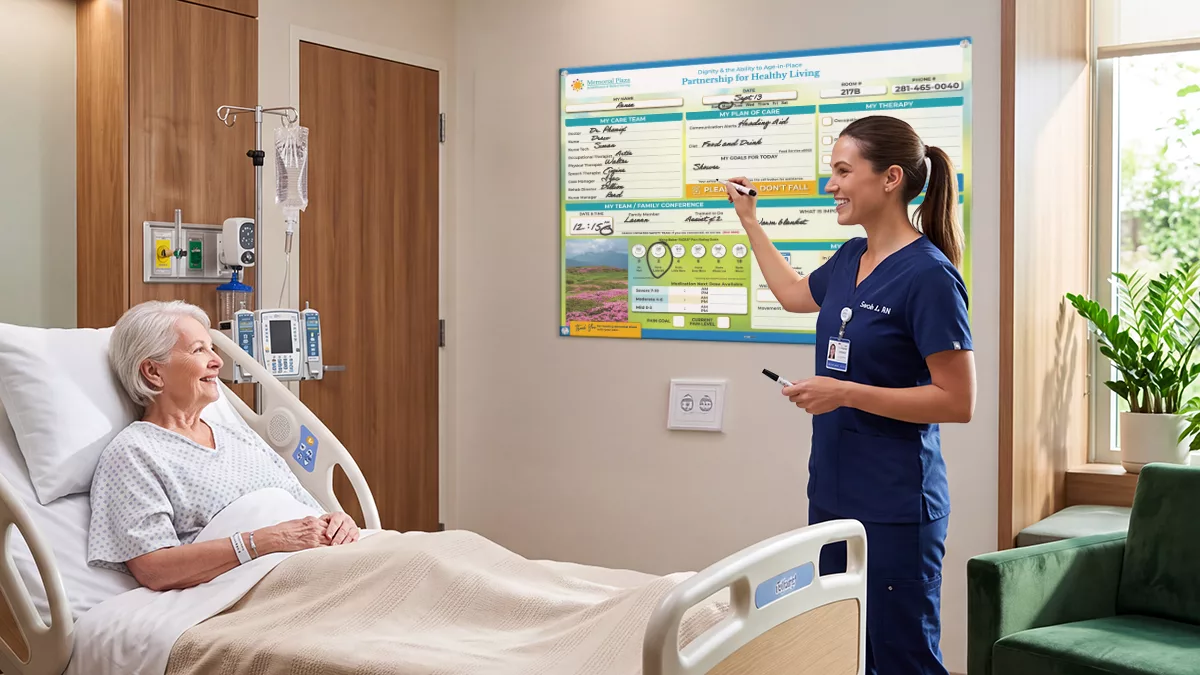
How patient communication boards deliver real ROI by improving patient safety, enhancing communication, and boosting HCAHPS scores in healthcare settings. Learn about the benefits of magnetic dry erase boards, their role in fall prevention, and how they support daily updates, shift changes, and coordination among caregivers. Explore practical strategies to optimize patient experience, reduce patient falls, and maintain organized, secure communication that acknowledges patient concerns and tracks progress and procedures effectively.
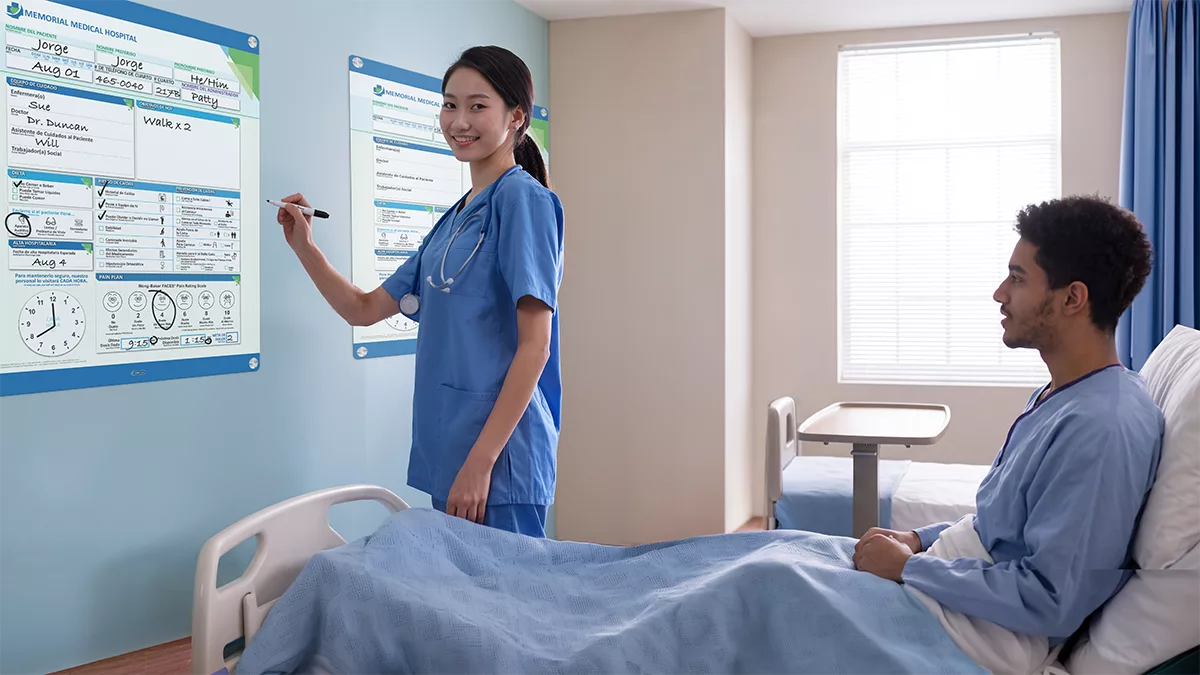
A well-designed Patient Whiteboard sits at the center of the patient communication experience in healthcare settings. These boards, including Hospital whiteboards, glass boards, and patient care boards, serve as frontline communication tools.
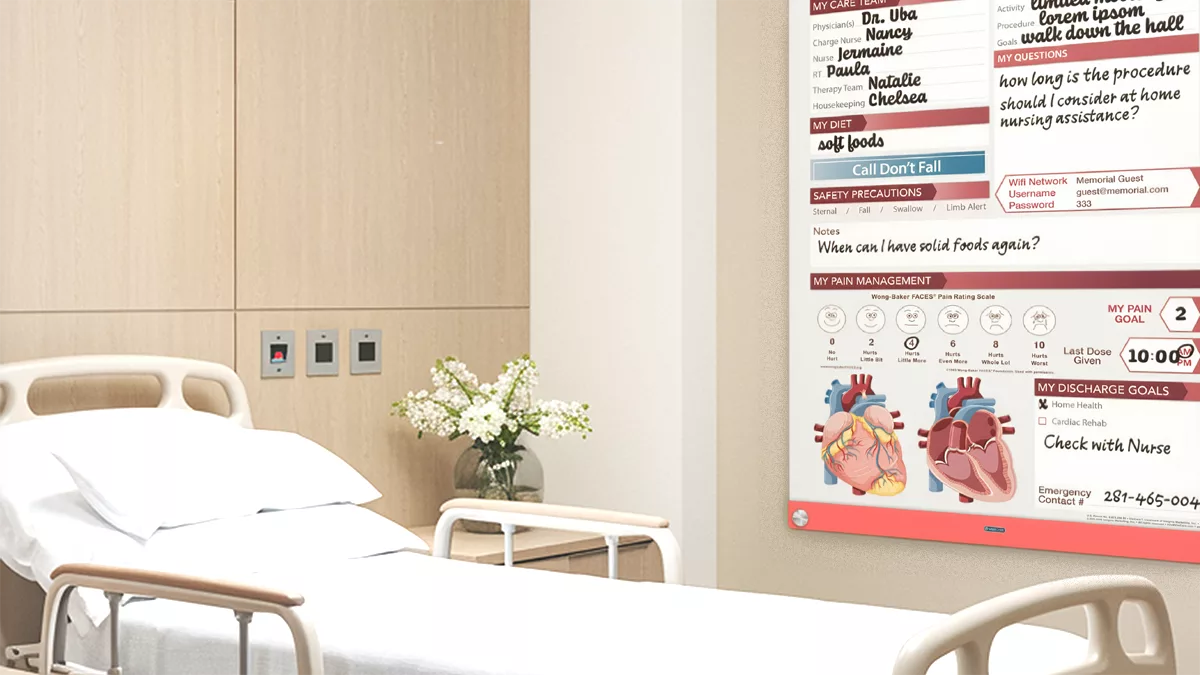
Every patient room already has a board on the wall. The real question is whether that board is doing its job—or just taking up space. For nurse leaders and patient experience teams, that single wall does a lot of heavy lifting. It tells patients who’s on their care team. It reminds families of the day’s […]

Learn how patient whiteboards improve nurse-patient communication, support HCAHPS scores, and engage patients—plus best practices to maximize their impact.
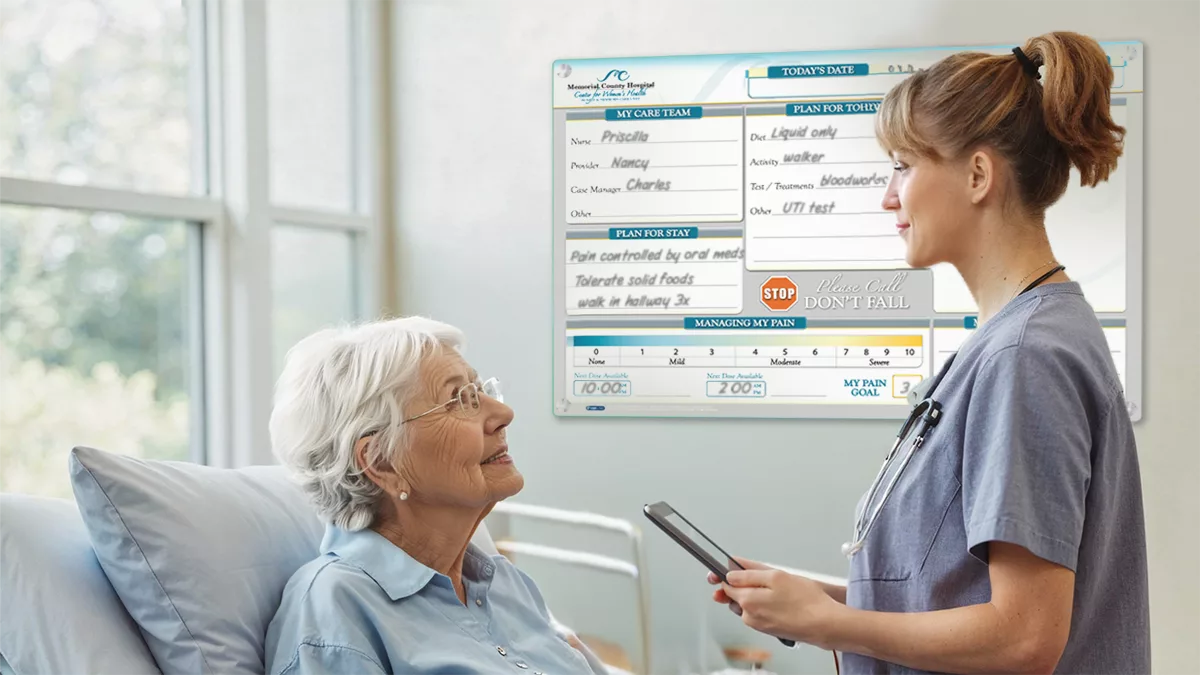
Learn patient whiteboard best practices—what to include, what to avoid, the right whiteboard size, and how to keep boards consistently updated.
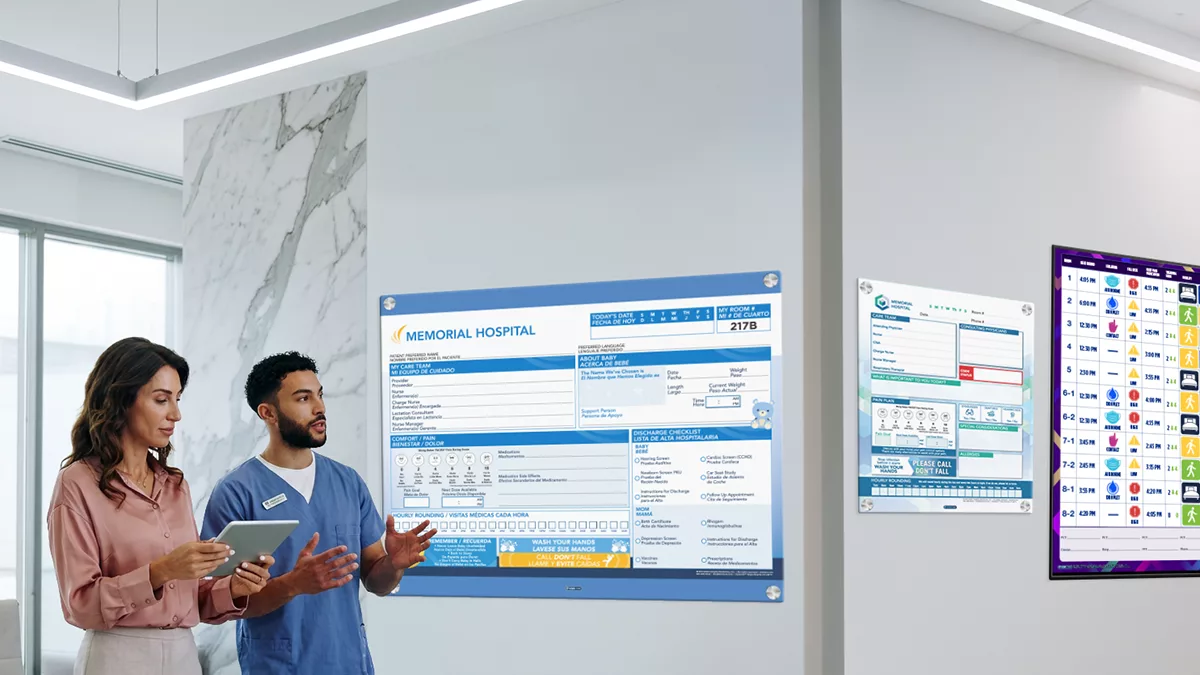
Why something as simple as a board on the wall matters so much. Clear patient room communication is tied directly to the outcomes hospital leaders track most closely: patient safety, satisfaction scores, and overall care quality. A well-designed board keeps everyone on the same page, literally.
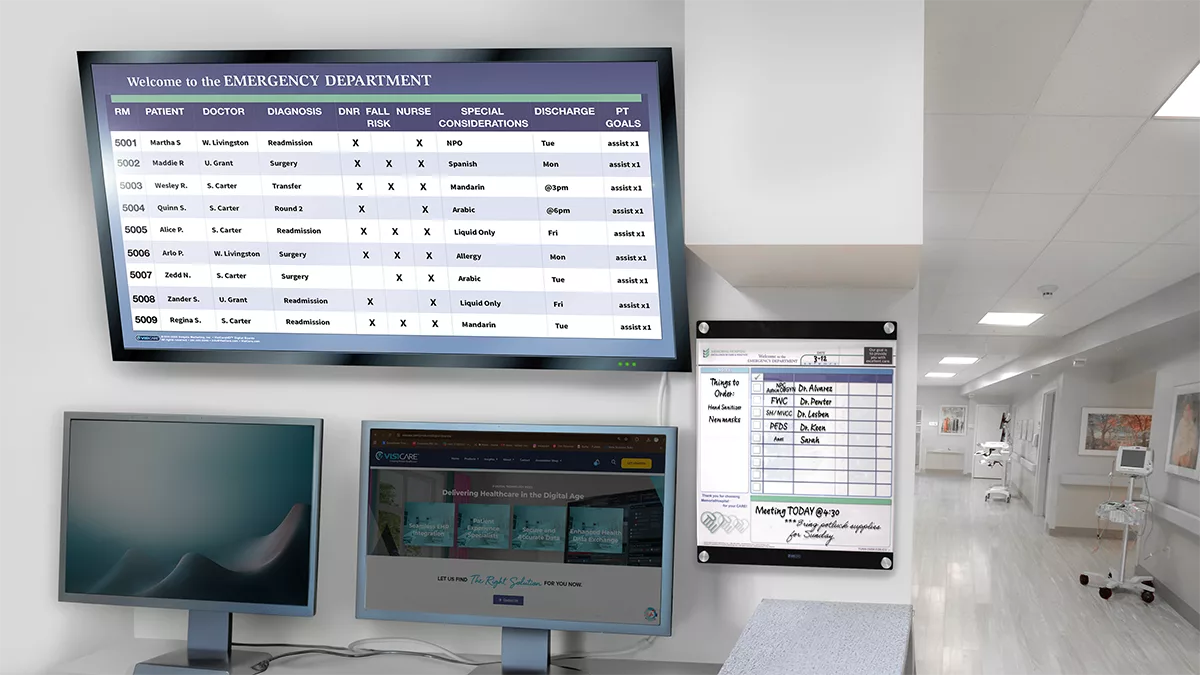
Effective communication in healthcare plays a critical role in improving patient outcomes and satisfaction levels. Communication boards serve as a vital tool to engage patients actively in their care by providing clear, consistent information that supports treatment adherence.

How to evaluate the ROI of interactive patient care systems by balancing clinical, operational, and financial returns. Learn strategies to improve patient outcomes, enhance nurse workflows, and optimize healthcare investments with practical steps and real-world insights.