
Nurse’s Secret Weapon for Slashing Stress and Living–Visual Communication in Healthcare: Patient Communication Boards as Patient Engagement Tools
In the complex ecosystem of a hospital, communication is the thread that holds patient care together. When that thread frays—due to shift changes, overwhelmed staff, or frightened patients—the quality of care suffers. Enter the patient communication board. Once a simple administrative tool, these boards have evolved into critical instruments for patient engagement, safety, and satisfaction. Today, healthcare systems are adopting strategies to improve patient experience and quality outcomes by leveraging visual communication tools that support care coordination and accountability.
Whether you are an administrator looking to improve patient survey scores or a nurse manager seeking to streamline workflow, understanding the full potential of communication boards is essential. Communication boards are associated with increased patient activation, which leads to better health outcomes and lower readmission rates. This article serves as the foundation for a broader exploration of visual communication strategies, setting the stage for deep dives into nurse burnout, medical error reduction, and future technology trends.
What Are Patient Communication Boards?
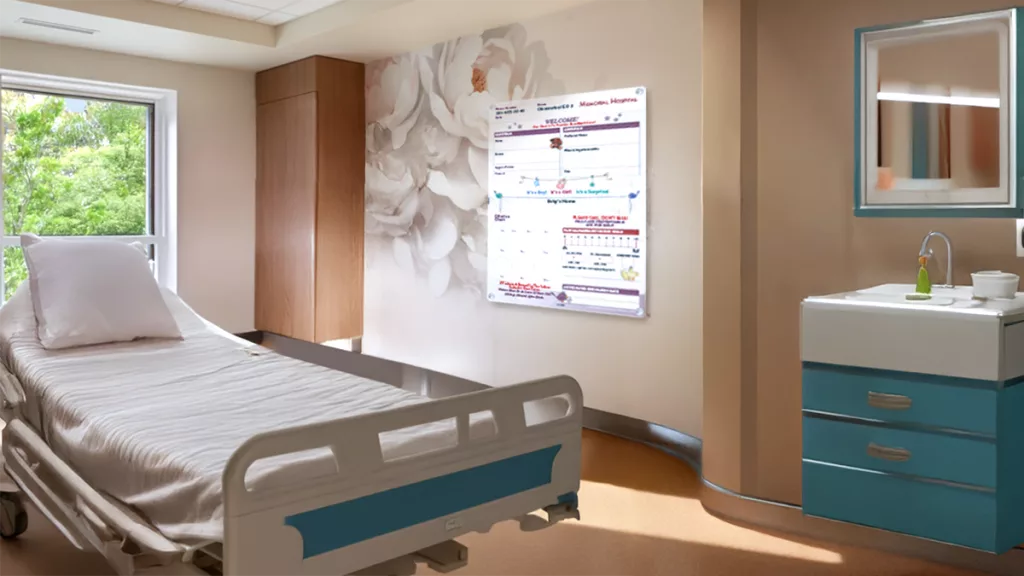
At their core, patient communication boards are visual tools designed to bridge the information gap between the care team and the patient. Located typically on the wall facing the patient’s bed, they serve as a centralized hub of information.
While they began as simple dry-erase boards for jotting down names, they have diversified significantly. Today, they range from:
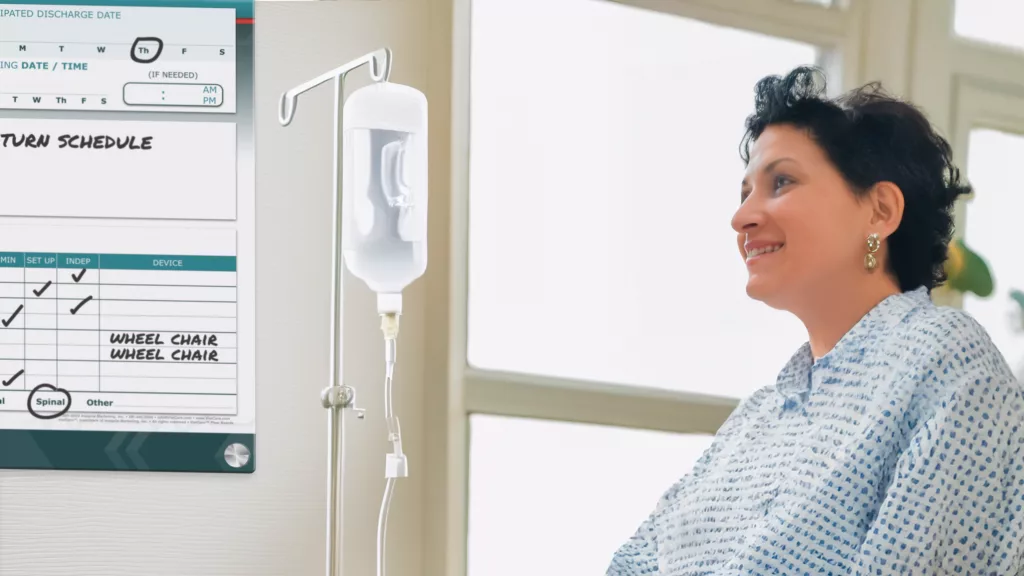
- Standard Bedside Whiteboards: Customizable, low-tech solutions that allow for quick, handwritten updates. Durable, easy-to-clean whiteboards with patient-specific templates enhance communication and visibility in any healthcare setting. Using standardized layouts and typography on these boards helps reduce confusion for staff and patients.
- Digital Communication Boards: Integrated screens that pull real-time data from Electronic Health Records (EHRs) to display vital signs, schedules, and care team details automatically. Digital solutions are designed to streamline workflows, improve patient understanding, and provide up-to-date information at a glance, enhancing the overall patient experience. Digital boards can also track hourly rounding and visualize care interactions, reassuring patients and families of continuous care. Patient portals are often integrated as digital solutions to further enhance patient engagement and access to information.
- Patient Room Displays: Interactive patient room displays combine real-time data with customizable content, empowering patients with information about their care plans, medications, and scheduled activities.
- Mobile Communication Boards: Portable, lightweight solutions that bring critical patient information to doctors, nurses, and caregivers on the go, ensuring continuity of care and efficient communication across departments.
- Specialty Boards: Tailored products for specific settings like ICU, surgery, or maternity, offering care-specific details and layouts to meet the unique needs of different healthcare environments.
Regardless of the format, the goal remains the same: to provide a “single source of truth” within the patient room. Visual anchors on patient communication boards help patients remember important information like discharge dates and upcoming procedures. Boards can display key content such as test results, diagnoses, and the patient’s preferred name to support provider communication and patient understanding. Using plain language and visuals on patient communication boards improves understanding, especially for individuals with lower health literacy. As we will explore in future discussions on “How to Choose the Right Patient Communication Board for Your Hospital,” selecting the right format depends heavily on your facility’s specific infrastructure and patient needs.
The Evolution of Communication Boards in Healthcare
The history of the communication board mirrors the history of patient-centered care itself. Decades ago, hospitals were strictly hierarchical. Information flowed from the doctor to the nurse, and eventually, if necessary, to the patient. Whiteboards in rooms were often blank or used solely for staff notes that were unintelligible to the layperson.
As the industry shifted toward a partnership model—where patients are active participants in their recovery—the tools had to adapt. The entire healthcare team, including physicians, became involved in using communication boards to facilitate effective patient engagement and care coordination. Boards moved from generic office supplies to custom-designed clinical tools. They began to include sections for “Patient Goals,” “Pain Management Plans,” and “Questions for the Doctor.”
Healthcare systems have adopted creative ways to improve communication and address health literacy through thoughtful board design, ensuring information is accessible and understandable for all patients. Today, we are seeing another leap forward with the integration of digital systems. Modern boards are no longer static; they are dynamic interfaces that can change with the patient’s condition.
Why Communication Boards Are Essential in Hospitals
Why is a piece of wall-mounted hardware so critical? Because in a high-stress environment, verbal communication is fleeting. A patient groggy from medication may not remember the nurse’s name introduced five minutes ago. A family member arriving late might miss the doctor’s update entirely.
Communication boards solve the problem of information retention and play a vital role in health care by enhancing provider communication and doctor patient communication. They help identify patient needs and address issues as they arise, supporting team collaboration and continuous follow-up for improved outcomes.
They provide:
- Continuity of Care: They ensure that every staff member entering the room sees the same critical information instantly.
- Patient Empowerment: When patients see the plan written down, they feel more in control and less anxious.
- Efficiency: They reduce the need for patients to constantly use the call light for basic information, such as “When can I eat?” or “Who is my nurse?”
- Comprehensive Information: Patient whiteboards display the names of care team members, daily goals, estimated discharge dates, and reminders for tests or procedures, making it easier to identify care gaps and coordinate tasks.
Clear, real-time information on communication boards reduces misunderstandings and improves patient satisfaction by ensuring everyone involved is informed and able to address issues promptly.
This visual reinforcement is not just a convenience; it is a clinical necessity.
Key Features of Effective Patient Communication Boards
An effective board is not just a blank slate; it is a structured guide for conversation. Actionable insights gathered from patient communication boards can inform key strategies for improving patient care, safety, and satisfaction. While designs vary, the most high-impact boards share specific features tailored to both the patient and the provider.
Appropriate staffing levels are essential to ensure that communication boards are maintained and updated regularly, supporting workflow and consistent patient experience. Effective patient communication boards must be updated daily to maintain trust in care quality. Additionally, the structured use of whiteboards can improve patient education during hospital stays, helping patients better understand their care plans and participate in their recovery.
For the Patient
- Care Team Identification: Clearly listing the names of the nurse, nursing assistant, and attending physician humanizes the staff and builds rapport. Making eye contact and using the patient’s preferred name during introductions further helps build rapport and recognizes the patient as a unique person, not just a medical case.
- The Plan for the Day: A schedule of upcoming tests, therapies, or rounds helps manage expectations. Considering the patient’s perspective when designing and using communication boards ensures that information is relevant and meaningful, leading to better engagement and satisfaction.
- Discharge Goals: A clear “Path to Home” section keeps the patient focused on recovery milestones. Patients who are actively involved in whiteboard communication report higher levels of patient activation, which can improve outcomes and the overall care experience.
For the Staff
- Safety Alerts: Visual icons for fall risks, allergies, or dietary restrictions ensure safety protocols are followed immediately upon entering the room.
- Pain Management Tracking: A visible log of pain goals and next medication times helps manage patient comfort proactively. Actively listening to patient concerns during pain management discussions allows staff to better understand and address individual needs. Nurses who listen to their patients’ concerns are better prepared to address issues as they arise. Incorporating the teach-back method—asking patients to explain information in their own words—ensures patient understanding and adherence to care instructions, ultimately improving outcomes.
Designing these boards requires a delicate balance between too much information and too little.
The Psychology Behind Communication Boards
The impact of these boards goes beyond logistics; it is deeply psychological. Hospitalization is a dehumanizing experience where many patients experience anxiety and stress, often feeling stripped of their autonomy. A communication board restores a measure of control.
For example, when a nurse writes a patient’s specific goal on the board—even something as simple as “Walk to the door”—it validates the patient’s agency and personalizes patient engagement by recognizing individual needs and preferences. This signals that healthcare providers are working with patients, not just on them, fostering true patient engagement and deeper trust. Sitting down while communicating with patients further improves their perception of the time spent with them, making them feel heard and understood. Patients who feel heard and understood are more likely to engage in their care.
Furthermore, the presence of written information reduces cognitive load. Patients do not have to anxiously memorize every detail; they can simply look at the wall. This visual support complements effective communication techniques such as active listening and positive body language, both essential for building trust and enhancing the overall patient experience. In medicine, communication boards play a vital role in supporting patient education and engagement, which improves health outcomes, enhances the patient experience, and reduces avoidable hospital readmissions.
This reduction in anxiety is a key component of patient safety and health outcomes, as stressed patients are less likely to absorb instructions or follow treatment plans accurately. By reinforcing key points visually and verbally, healthcare providers can help patients better understand their care, improving patient adherence and health results.
Staff Training and Development: Empowering Teams for Patient-Centric Care
Creating truly patient-centered care starts with something we’re passionate about—empowering healthcare teams through thoughtful staff training and development. We know that in today’s bustling healthcare environments, ongoing education isn’t just another checkbox on your to-do list. It’s actually one of the smartest investments you can make for better patient outcomes, happier patients, and that consistently exceptional experience everyone deserves.
Here’s what we’ve learned: the most effective training programs go way beyond clinical skills—though those are important too, of course. We focus on communication strategies that help your clinicians become genuine listeners, the kind who really hear what patients are saying and invite them to be active partners in their own care. When we equip teams with these active listening tools and clear, compassionate communication techniques, something beautiful happens—every patient interaction becomes a chance to build real trust and deeper engagement.
That’s where patient communication boards become your secret weapon. When we train staff to weave these boards into their daily rhythm, they can share key information more effectively, address concerns in ways that truly resonate with patients, and make sure families always feel included and informed. We’ve seen this approach not only enhance the patient experience but also cut down on those frustrating misunderstandings that can lead to medical errors—creating safer, higher-quality care all around.
The healthcare organizations we work with consistently see remarkable improvements in patient satisfaction scores and overall health outcomes when they prioritize this kind of staff development. By making communication and patient engagement training a cornerstone of your team’s growth, you’re empowering them to deliver care that’s not just clinically excellent—it’s genuinely patient-centered at its core. In today’s healthcare landscape where value-based care and patient-centered outcomes matter more than ever, ongoing staff development really is your pathway to creating lasting improvements for both patients and providers.
Overcoming Challenges in Implementation
Despite their benefits, implementing communication boards is not without challenges. Common hurdles include:
- Compliance: Getting staff to consistently update the boards.
- Maintenance: Keeping boards clean and markers available.
- Integration: Ensuring digital boards sync correctly with EHRs.
Success lies in culture change. Updating the board must be viewed not as “one more task” but as an integral part of the care routine, similar to washing hands. When integrated into bedside shift reports, the board becomes a tool for the nurse, helping to organize their own thoughts and handoffs.
Addressing these workflow challenges is vital for staff well-being. A proactive approach that addresses issues as they arise is essential to improving patient satisfaction, as it ensures concerns and clinical problems are identified and resolved efficiently. Effective use of patient communication boards not only enhances the quality of patient care but also reduces the cognitive burden on nursing staff by providing a clear, centralized source of information. When boards are consistently updated and integrated into daily routines, they streamline communication during shift changes and reduce the likelihood of medical errors. This efficiency can alleviate stress and burnout among healthcare providers, fostering a more positive work environment.
Additionally, a clean, comfortable environment significantly impacts patient satisfaction in hospitals, while a transparent approach to billing helps patients feel more confident and satisfied with their care. Following up with patients post-visit demonstrates that their concerns and experiences matter, further enhancing engagement and trust. These strategies are important for the future of patient-centered care.
Moreover, empowering staff with user-friendly communication tools encourages greater engagement and accountability. Training and leadership support are essential to embed these practices into the healthcare culture. By prioritizing the maintenance and utilization of communication boards, healthcare organizations can improve both patient outcomes and staff satisfaction, creating a safer, more collaborative care experience for everyone involved.
The Future of Patient Communication Boards
As hospitals become “smarter,” so too will their walls. The future of patient communication boards lies in custom care. Actionable insights from digital boards can inform creative ways to personalize patient engagement, such as adapting communication methods and workflows to individual needs. Recognizing patient needs and preferences fosters deeper trust and a more meaningful patient experience. Imagine boards that can translate text into the patient’s native language, or layouts that allow patients know how to order meals and view education tools about their specific condition.
We are moving toward an era where the board is a two-way communication portal, connecting the patient room to the wider hospital understanding.
Unlocking the Power of Patient Communication Boards
Patient communication boards are far more than furniture supplies; they are essential clinical tools that transform the hospital environment. By making the invisible visible—plans, names, goals, and risks—they build trust, ensure safety, and empower patients to be partners in their own care. Involving patients in their care decisions enhances buy-in and trust, which is a key aspect of ethical care. Communication boards contribute to quality outcomes by supporting care coordination and patient engagement, as demonstrated by healthcare research focused on improving patient safety and experience. Additionally, following up with patients post-visit can strengthen trust and foster long-term loyalty.
As healthcare continues to evolve, visual communication remains a constant pillar of effective treatment. We encourage you to follow our upcoming series as we delve deeper into visual communication strategies, burnout reduction, and the technology that will shape the hospitals of tomorrow.