
The Future of Patient Engagement: Trends in Communication Technology
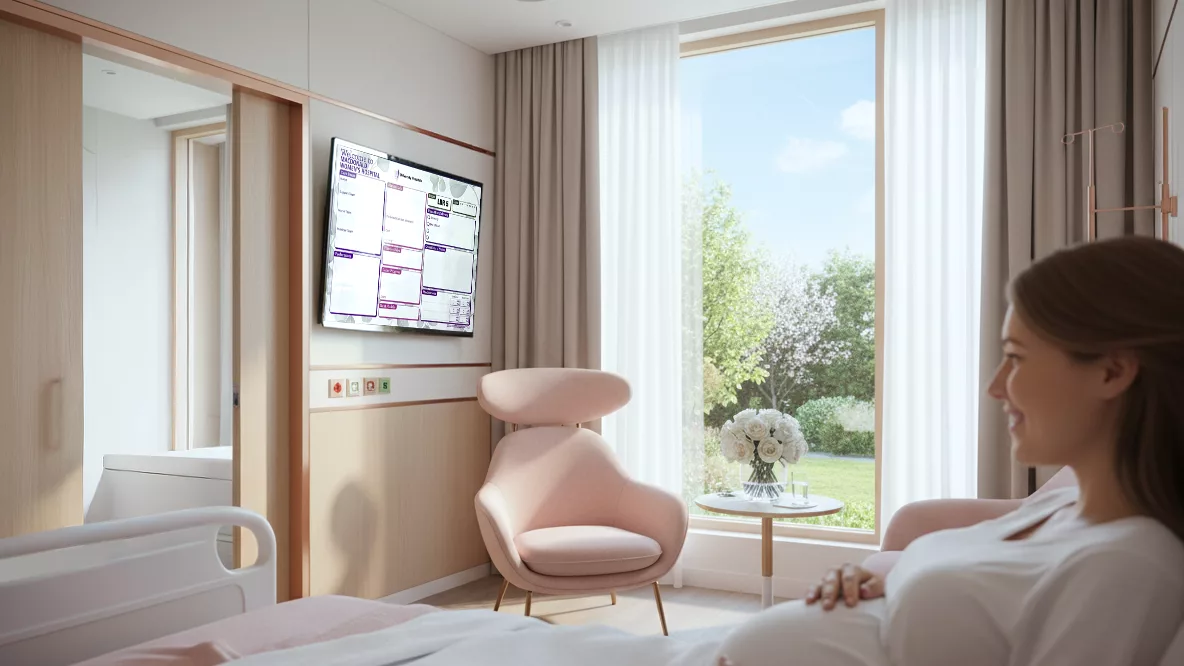
In today’s fast-paced healthcare environment, effective communication is the backbone of patient engagement. From bedside tools to telehealth solutions, communication technology is evolving to meet the needs of both patients and staff. This article explores the latest trends in communication technology, focusing on tools like electronic patient boards, scheduling boards, nurse unit boards, and more.
By centering nurses and staff as decision-makers, these innovations aim to streamline workflows, enhance patient satisfaction, and improve care delivery.
What are the 10 latest Patient Care technology trends?
Key technology trends in healthcare communication, including:
- Electronic Patient Boards offering real-time updates integrated with EHRs.
- Scheduling Boards to improve operational efficiency and coordination.
- Nurse Unit Boards for team communication and real-time alerts.
- Telehealth Integration for virtual consultations and remote monitoring.
- Door Tablets displaying patient information outside rooms.
- Hospital Furniture designed to support communication and staff workflows.
- AI enabling real-time, dialog-driven experiences with chatbots and virtual assistants.
- Centering nurses and staff in decision-making for practical tool design.
- Integration of AI predictive analytics to anticipate patient needs.
- Digital communication tools designed to enhance patient engagement and satisfaction.
Many healthcare organizations are leveraging existing tools to improve patient engagement and satisfaction, integrating current digital solutions with new technologies for better communication and measurement.
- Digital engagement strategies are transforming patient-provider interactions by integrating secure portals, automated workflows, and self-service options. These approaches enhance communication, efficiency, and trust while managing security and compliance risks.
- Key strategies adopted by healthcare organizations include implementing digital patient communication systems, utilizing automation, and focusing on patient-centered design to improve care quality and patient satisfaction.
AI is becoming a core operational capability in healthcare communications, especially for high-volume, compliance-heavy customer communications. Automation is essential for modernizing customer communications, providing the structure that AI depends on to ensure accuracy and compliance.
Implementing digital patient communication systems can help reduce missed appointments, improve attendance rates, meet regulatory requirements, and improve HCAHPS scores.
The Role of Communication Technology in Patient Engagement
Patient engagement is more than a buzzword—it’s a critical component of quality care. Communication technology plays a vital role in empowering patients while supporting nurses and staff in their daily tasks. Tools like VisiCareHD™ Digital Boards are designed to bridge the gap between patients and caregivers, providing real-time updates and fostering transparency.
Care quality is a key metric in healthcare, encompassing safety, communication, and patient-centered outcomes. Provider communication is central to patient engagement and care quality, as effective information exchange, empathy, and engagement by healthcare providers directly influence patient satisfaction and trust. Organizations focus their strategies on improving provider communication and patient experience measurement, shifting towards practical, meaningful, and context-aware approaches.
Improving patient satisfaction is crucial for the long-term success of any healthcare organization. Nurses who listen and understand their patients’ concerns are better prepared to address issues, resulting in better patient outcomes. Empathy, active listening, and clear communication are critical components of effective patient care and have a significant impact on patient satisfaction. Structured communication interventions, such as multidisciplinary rounds, have demonstrated measurable improvements in patient-reported satisfaction.
Communication technology plays a pivotal role in modern healthcare by bridging critical gaps that impact patient outcomes and staff efficiency. As highlighted in, “Leveraging Digital Tools to Enhance Patient Care and Staff Collaboration”, tools like digital patient boards and EHR systems amplify interpersonal strategies, enabling real-time information sharing, reducing errors, and fostering seamless collaboration among care teams. By integrating these technologies thoughtfully, healthcare facilities can enhance patient engagement while empowering nurses and staff to focus on delivering compassionate, high-quality care.
Patient Education and Empowerment: Informing and Involving Patients
We believe that empowering you as a patient through clear, caring education sits right at the heart of what truly patient-centered care should feel like—and it’s one of the most powerful ways we can help you achieve better health outcomes. When we take the time to really inform and involve you in your treatment plans, something wonderful happens: not only do you feel more satisfied with your care, but you also become more engaged and more likely to follow through with our recommendations. We make it our mission to transform complex medical information into something that actually makes sense—using everyday language and crystal-clear communication—so you can truly understand your health conditions, your treatment options, and what you can do to take care of yourself.
Today’s healthcare world is embracing some pretty amazing tools to connect with you in more meaningful ways—from user-friendly digital platforms to helpful mobile apps that deliver personalized education and support right to your fingertips. These technologies put reliable health information at your disposal, help you manage your appointments with ease, and open up direct lines of communication with your care team. All of this comes together to create better outcomes for you and a healthcare experience that actually flows smoothly. We’re also using real-time feedback tools and interactive resources that help you understand your care better, so we can address your questions and concerns the moment they come up.
Health literacy—your ability to understand and use health information—is absolutely crucial to everything we do in patient education, and we take this seriously. We work hard to simplify complex information and tailor our communication specifically to your needs and preferences, because this is how we build genuine trust and support you in making informed decisions about your health. When we sit down with you, we listen actively, maintain eye contact, and use positive body language because we want you to feel truly heard and valued. These meaningful interactions lead to higher satisfaction and better relationships between us.
We understand that culturally sensitive and linguistically appropriate education isn’t just nice to have—it’s essential for addressing health disparities and ensuring that everyone receives equitable care. We can improve health equity by offering materials in multiple languages, bringing in skilled interpreters when needed, and thoughtfully considering cultural factors as we develop your treatment plans. These efforts help you navigate the healthcare system with confidence and clarity, no matter what your background might be.
We’re also excited about how predictive analytics and data-driven insights are transforming the way we approach patient education. By carefully analyzing your feedback, health outcomes, and how well you’re able to stick to treatment plans, we can spot areas where we need to do better and develop targeted interventions that really work for you. This proactive approach doesn’t just improve your engagement with your care—it also supports better health outcomes and helps keep costs down by reducing hospital readmissions and unnecessary interventions.
At the end of the day, investing in your education and empowerment is one of the most important strategies we have for delivering the high-quality, patient-centered care you deserve. When we equip you with the knowledge and tools you need to actively participate in your health journey, we’re not just improving your satisfaction and strengthening the trust between us—we’re achieving better outcomes across every aspect of your care. That’s what we’re here for, and that’s what drives everything we do.
Electronic Patient Boards: The Next Generation of Bedside Communication
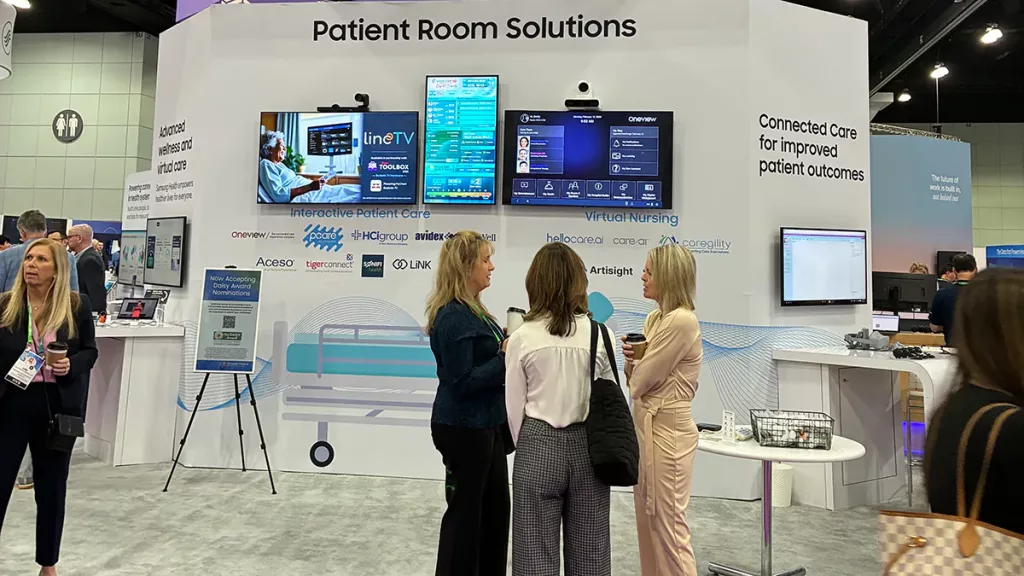
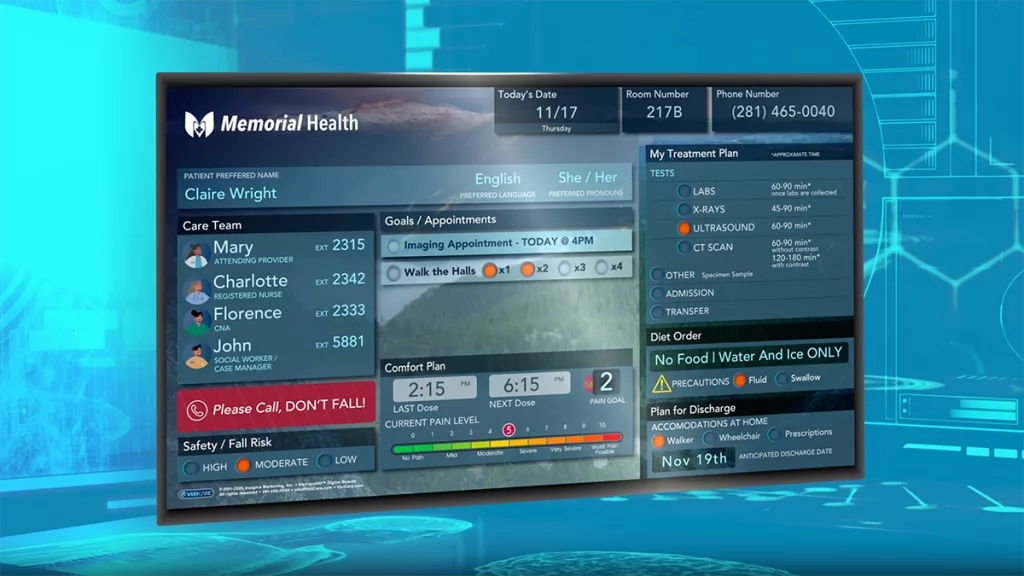
Gone are the days of static whiteboards. Electronic patient boards, like VisiCareHD™ Digital Boards, offer real-time updates by integrating seamlessly with Electronic Health Records (EHRs). These boards deliver information that is timely, relevant, and meaningful to both patients and staff by displaying essential details such as care team information, pain management references, and medication schedules.
Key Features of Elite Digital Boards:
- Real-Time Updates: Automatically syncs with EHRs to ensure accurate, up-to-date information.
- Medication Reconciliation Support: Helps ensure medication lists are accurate and up-to-date during transitions of care, supporting patient safety and adherence.
- Automated Prescription Notifications: Notifies patients when prescriptions are ready for pick-up, when refills are needed, and provides instructions on how to take their medication.
- Custom Design Options: Tailored layouts to align with hospital branding and meet department-specific needs.
- 24/7 Availability: Industrial-grade displays ensure continuous operation.
By reducing manual updates, these boards save nurses valuable time and improve workflow efficiency.
Scheduling Boards: Keeping Everyone on the Same Page
In a busy healthcare setting, effective scheduling is crucial for operational efficiency and patient safety. Scheduling boards serve as a central command center for managing patient care plans, staff assignments, and room allocations. These visual tools enhance transparency and coordination across departments, ensuring that every member of the care team is aligned and informed. Scheduling boards can also be used to manage follow-up appointments, ensuring timely follow-up and ongoing patient engagement. Whether it’s tracking daily patient appointments, coordinating surgical schedules, or managing discharge planning, scheduling boards streamline complex operations and significantly reduce the risk of miscommunication or delays. Follow-up contacts provide the chance to strengthen and reestablish patient engagement after appointments. By providing a clear, at-a-glance overview of activities, they empower staff to anticipate needs, allocate resources effectively, and deliver timely, well-coordinated care. Streamlining appointment scheduling and reducing wait times can significantly enhance patient satisfaction.
Nurse Unit Boards: Enhancing Healthcare Providers Communication
Nurse unit boards serve as centralized hubs for team updates and coordination. These boards display shift schedules, patient assignments, and real-time alerts, fostering collaboration and improving response times.
By centralizing information, nurse unit boards help overcome communication barriers—such as physical, social, and psychological obstacles—by making essential updates visible to all team members and streamlining coordination.
VisiCare’s digital solutions, such as their nurse unit boards, are designed to enhance team communication and ensure that critical information is always accessible. Effective communication in nursing includes verbal and nonverbal skills, active listening, and patient education techniques; nurse unit boards support these practices by providing a clear, shared platform for information exchange.
Telehealth Integration: Expanding Patient Engagement Beyond the Hospital
Telehealth tools complement in-hospital communication technology by providing continuity of care. From virtual consultations to remote monitoring, telehealth solutions reduce in-person workload while maintaining high-quality care.
Telehealth solutions enable digital engagement across many channels, allowing patients to connect with providers through video, messaging, and secure portals. Language translation technology integrated into telehealth platforms ensures that every patient receives the same level of care and engagement, regardless of language.
Door Tablets: A New Frontier in Patient Room Communication
Door tablets are revolutionizing patient room communication by displaying critical information outside the room. These tools provide quick access to patient details, care team information, and safety alerts, all while maintaining patient privacy.
Door tablets enhance communication in patient rooms by providing real-time updates and educational resources directly at the point of care. They can also be used to share important information with family members, supporting their involvement in patient care and education. Patient education delivered through door tablets aims to give patients and their families the foundational knowledge they need about health and healthcare options.
Hospital Furniture Choices: Supporting Communication and Care
Even hospital furniture plays a role in enhancing communication and patient engagement. Mobile workstations, bedside tables, and other ergonomic designs support staff workflows and integrate seamlessly with communication technology.
Creating a comfortable environment, including comfortable seating and reduced noise levels, is essential for patient satisfaction. Comfortable seating in both patient rooms and the waiting room helps reduce anxiety and enhances overall satisfaction for patients and visitors. Lower noise levels in hospital environments contribute to better patient comfort, improved rest, and a more positive perception of care quality. Additionally, a clean and comfortable environment significantly impacts patient satisfaction in hospitals.

AI Unlocks Real-Time, Dialog-Driven Experiences
In healthcare communication technology, nurses and staff are at the heart of decision-making, using Artificial Intelligence (AI) as a powerful tool to enhance patient engagement and streamline care delivery. Rather than replacing human judgment, AI supports healthcare professionals by enabling real-time, dialog-driven experiences that facilitate interactive conversations between patients, providers, and care teams.
Responsible AI is essential in healthcare communication, ensuring data protection, compliance, and ethical use of patient information within regulated environments. AI-driven health risk assessments help identify patients’ lifestyle factors and health risks, supporting personalized care by tailoring services to individual needs. Screening for care gaps with AI tools ensures that patients receive a personalized healthcare plan, addressing missed needs and improving overall care quality. Personalized digital communications can be delivered across multiple channels, with automated response mechanisms that facilitate two-way communication between patients and care teams. AI also supports primary care by enabling proactive follow-up and coordination with patients after discharge, helping to prevent hospital readmissions and improve recovery outcomes.
Nurses and staff leverage AI-driven chatbots and virtual assistants to handle routine inquiries, schedule appointments, provide medication reminders, and deliver tailored health education in real time. These AI tools reduce manual processes and free up healthcare workers to focus on personalized patient care. By integrating AI with existing communication systems, healthcare teams can simplify complex information and present it in ways that align with patient preferences and health literacy levels.
Furthermore, AI’s predictive analytics capabilities assist nurses and staff in anticipating patient needs, allowing proactive interventions that lead to better health outcomes. This collaboration between healthcare professionals and AI fosters meaningful interactions, strengthens trust, and enhances the overall patient experience. As AI technology evolves, its role as a supportive tool will continue to grow, empowering nurses and staff to deliver more accessible, personalized, and effective care.
Centering Nurses and Staff in Decision-Making
The success of any communication technology depends on the people who use it. By involving nurses and staff in the decision-making process, healthcare facilities can ensure that tools are practical, effective, and aligned with patient care goals. Many organizations are recognizing the value of involving nurses and staff in decision-making to improve patient care.
Healthcare organizations benefit from staff input in designing communication tools and strategies, leading to better alignment with clinical workflows and patient needs. Health systems are increasingly integrating staff feedback to enhance patient engagement and satisfaction. Investing in staff training and creating a patient-centric culture are essential for improving patient satisfaction.
VisiCare’s solutions are designed with input from healthcare professionals, ensuring that their tools meet the real-world needs of nurses and staff.
The Patient Experience Future is Here
The future of patient engagement lies in communication technology that prioritizes both patients and staff. Tools like VisiCareHD™ Digital Boards are leading the way, offering real-time updates, streamlined workflows, and enhanced patient satisfaction.
To learn more about how digital boards are transforming healthcare, check out our article, “The Rising Role of Electronic Whiteboards in Hospitals.”
Ready to elevate your hospital’s communication strategy? Explore VisiCare’s innovative solutions at VisiCareHD™ Digital Boards.