
How Custom Patient Boards Build Trust at the Bedside
Quick answer: Custom patient boards build trust by making care visible at the bedside. They display the nurse’s name, daily goals, next steps, and a space for questions—reinforcing the same visibility, continuity, and approachability that make nurses America’s most trusted profession, while supporting clearer communication and stronger patient satisfaction scores.
When TIME published “Why You Trust Your Nurse More Than Your Doctor” (Angela Haupt, June 22, 2026), it put a number to something every Director of Nursing already knows. Nurses have ranked as America’s most trusted profession 25 times since 1999. In the most recent Gallup honesty and ethics poll, 75% of Americans rated nurses’ standards as “very high” or “high”—compared to just 57% for doctors.
The reason isn’t personality. According to the experts Haupt interviewed, trust is built at the bedside, through visibility, presence, and approachability. As Jennifer Mensik Kennedy, president of the American Nurses Association, put it: nurses are “physically and emotionally closer to patients than almost anyone in the system.”
For hospital leaders, that trust is more than a feeling. It connects directly to patient engagement, communication scores, and outcomes. The question for administrators is how to support it. The best patient room communication tools don’t try to manufacture trust—they extend the trust nurses already work hard to build. This post explores how custom patient boards reinforce that nurse-led trust, shift after shift, room after room.
Trust Starts With Visibility
The TIME article makes one point especially clear: patients trust nurses partly because nurses are visible. They’re there at 2 a.m. They notice a slight change in skin tone or breathing. They’re present during fear and uncertainty, not just at decision points. Doctors, by contrast, often work invisibly—charting, calling consultants, tracking down a CT result, and arguing with insurance.
That contrast holds a lesson for hospital communication. When the care plan is invisible to a patient, confusion and anxiety grow. When information is visible, trust grows.
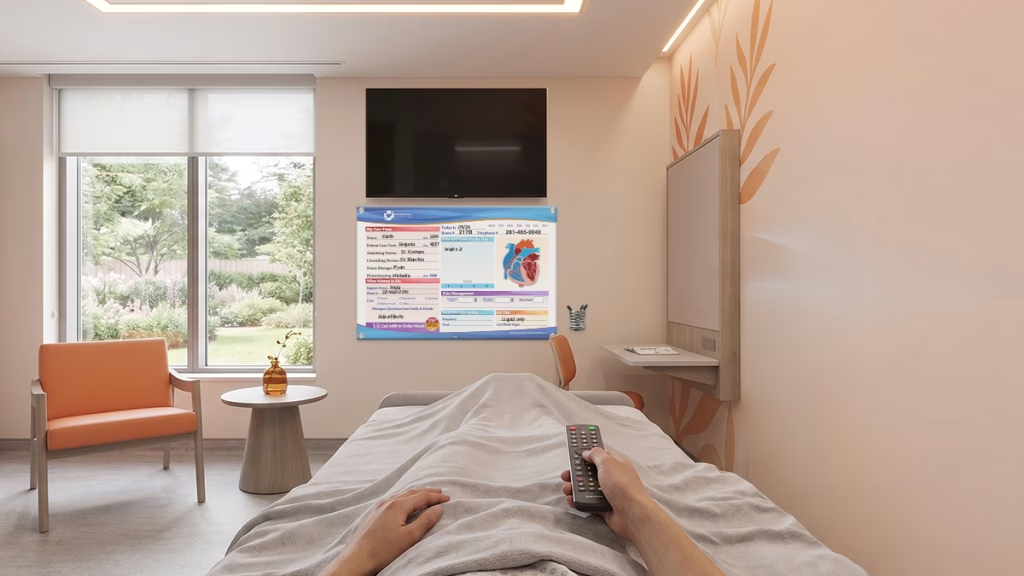
This is exactly where bedside communication tools earn their place. A well-designed board takes an invisible system and turns it into something patients and families can see and understand. Patient room communication boards make the plan visible—who’s caring for you, what today’s goal is, and what happens next—so patients aren’t left guessing between rounds.
How Custom Patient Boards Reinforce Nurse-Led Trust
Each driver of nurse-patient trust identified in the TIME article has a direct counterpart on a thoughtfully designed board.
- Knowing who’s caring for you. Boards identify the nurse’s name and role, plus the wider care team. This reinforces the visible, familiar presence patients rely on—and answers the question patients ask first.
- Continuity across shifts. Nurses work 12-hour shifts and notice changes moment to moment. Custom hospital patient whiteboards carry that continuity across handoffs, so patients aren’t forced to re-explain their story to every new face.
- Making the small questions easier. The article notes that patients “ask nurses the small ones”—and those small questions often turn out to be the ones that matter. A dedicated space for patient and family questions lowers the barrier to asking.
- Showing the plan and next steps. Daily goals and next milestones echo the way nurses translate clinical information into language patients understand. In-room communication boards make that translation permanent and visible.
Boards Don’t Replace Nurses—They Extend Them
A board is a tool, not a substitute for human care. The TIME article is clear that trust comes from nurses’ presence, training, and advocacy—none of which can be printed on a wall.
What a board can do is amplify nurse communication. It reinforces the messages nurses deliver, reduces the need to repeat the same explanations to every family member, and frees nurses to focus on the relational work only they can do. The board handles the recurring details so the nurse can be fully present.
There’s an important caveat here, and it’s one healthcare leaders rightly raise: any tool that adds documentation burden erodes the nurse-patient relationship rather than supporting it. A trust-building board should simplify, not complicate. The best designs are quick to update, easy to read, and built around the workflow nurses already follow.
What to Include on a Trust-Building Patient Board
A board earns its value through the right content. These elements consistently support clearer communication at the bedside:
- Nurse name and role
- Care team names
- Daily goal
- Next milestone or next steps
- Pain management plan
- Discharge progress
- Safety reminders (such as fall risk or mobility status)
- A dedicated space for patient and family questions
Each element maps back to a trust driver. Names support visibility. Goals and milestones support continuity. A question space supports approachability. Safety reminders and care plans support advocacy. Together, they put the qualities patients trust most right on the wall.
Why Customization Matters by Unit
A one-size-fits-all board undercuts the goal. Different units build trust around different concerns, so the content that reassures a maternity patient differs from what reassures someone in the ICU. Customizable hospital room boards let each unit emphasize what matters most:
- Med-surg: discharge milestones and daily goals to keep recovery on track
- ICU: care team clarity and family communication during high-stress moments
- Maternity: birth preferences, feeding plans, and milestone tracking
- Oncology: continuity, symptom and pain plans, and space for sensitive questions
- Rehab: progress tracking and mobility goals to keep patients motivated
Matching the board to the unit ensures the tool reflects how trust is actually built in that environment—not a generic template that staff and patients learn to ignore.
The Operational Value of Trust
For administrators weighing the investment, trust translates into measurable operational gains:
- Stronger patient and family engagement, because everyone can see the plan
- Fewer repeated questions and clearer expectations across the care team
- Smoother shift handoffs and better continuity of care
- Improved HCAHPS communication scores, which reward clear, consistent communication
The ROI case is straightforward. Custom patient boards are a low-cost, high-adoption tool that supports existing workflows rather than disrupting them—and they strengthen the exact communication metrics hospitals are measured on. Few investments align patient experience and operational performance so directly.
Visibility Builds Trust—and Boards Make It Visible
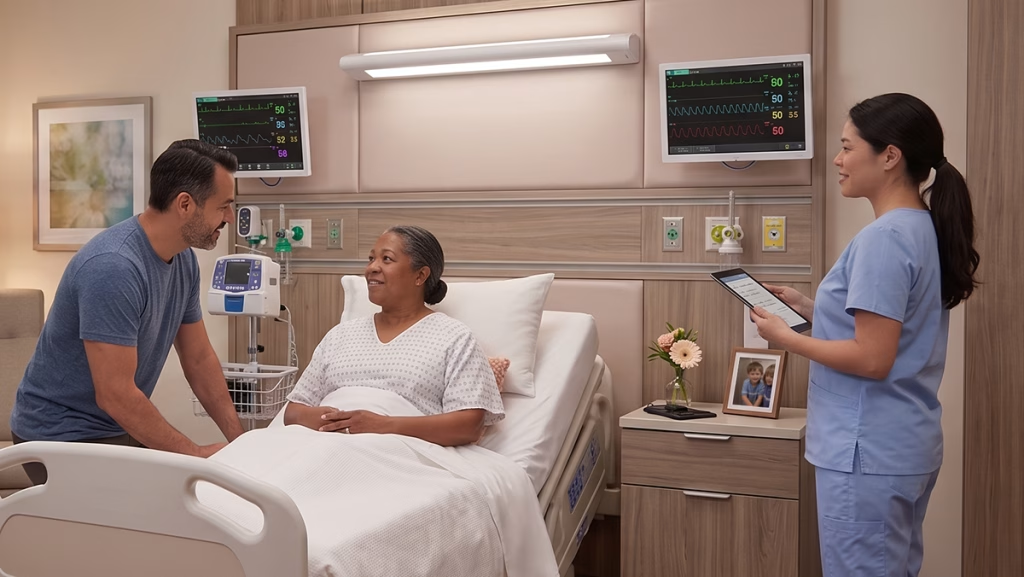
The lesson from TIME’s reporting is simple: nurses earn trust through visibility, presence, and clear communication. Custom patient boards put those same qualities on the wall—every shift, in every room. They don’t replace the nurse at the bedside; they extend the nurse’s reach when the room is quiet and the family has questions.
For healthcare leaders ready to act, the next steps are practical. Assess where your current bedside communication leaves gaps. Identify the unit-specific needs that matter most to your patients. Then explore board designs built around those needs.
If you’re ready to strengthen the trust your nurses already work hard to build, explore our customizable patient board options or request a consultation to design boards tailored to each of your units.
Frequently Asked Questions
What should be included on a patient room communication board?
A strong patient room communication board includes the nurse’s name and role, care team names, the daily goal, next steps or milestones, pain management plan, discharge progress, safety reminders such as fall risk, and a dedicated space for patient and family questions. Each element supports clarity, continuity, approachability, and advocacy.
Do patient whiteboards improve HCAHPS scores?
Patient whiteboards support the communication behaviors that HCAHPS measures—keeping patients informed, setting clear expectations, and reinforcing consistent messaging across shifts. By making the care plan visible and reducing confusion, in-room communication boards help strengthen patient perceptions of communication, which is a key driver of HCAHPS communication scores.
How are custom patient boards different from standard whiteboards?
Custom patient boards are designed around a specific unit’s workflow and patient needs, rather than offering a blank, generic surface. A maternity board, for example, might include feeding plans and birth preferences, while an ICU board prioritizes care team clarity and family communication. This customization improves staff adoption and makes the board genuinely useful at the bedside.
Do patient communication boards add to nurses’ workload?
Well-designed boards should reduce workload, not add to it. By displaying recurring information—names, goals, next steps—boards cut down on repeated explanations and free nurses for relational care. The key is choosing a board that is quick to update and built around existing workflows, so it simplifies communication rather than creating new documentation tasks.