
Smart Staffing: Predicting Labor to Elevate Improving Patient Outcomes
Directors of Nursing and hospital administrators face a persistent challenge balancing tight operational budgets with the continuous demand for high-quality care. Across the broader healthcare industry and within health systems of all sizes, staffing challenges are widespread and have a direct impact on care delivery. Medical facilities can no longer rely on outdated scheduling methods or simple guesswork to determine staff requirements. In modern healthcare environments, patient acuity and census volumes fluctuate rapidly. When nurse scheduling fails to match these real-time demands, hospitals experience a cascade of negative effects, ranging from increased staff burnout to compromised safety standards.
Predicting labor needs accurately stands as a fundamental component of true healthcare improvement. Continuous improvement and system changes are essential for optimizing care delivery and adapting to evolving patient needs, ensuring that quality and safety remain at the forefront. When hospital administrators align their staffing models directly with patient volume and severity of illness, facilities see an immediate boost in operational efficiency. Nurses working in a balanced environment have the necessary time to deliver compassionate, focused care. This strategic alignment reduces the strain on clinical teams and ensures every patient receives the attention they require for a safe recovery.
This vital intersection of predictive staffing based on evidence based practice and intuitive bedside technology is key. How accurate labor prediction combined with user-friendly lead to clinical tools that bridge communication gaps and reduce call-button fatigue. Ultimately, these targeted strategies drive better clinical outcomes and offer a clear path to cost-effective innovation for your facility.
The Direct Link Between Staffing and Clinical Outcomes
The Core Issue
Understaffing or misaligned scheduling directly contributes to an overworked nursing team. When clinical staff must rush from room to room to cover gaps in the schedule, the natural risk for operational errors increases. Medication delays, overlooked vital sign changes, and rushed handoffs occur more frequently when labor is stretched thin. In addition, diagnostic mistakes and other adverse effects—such as medication errors or patient safety risks—can result from inadequate staffing. Medical errors, including diagnostic mistakes, are a leading cause of death in the United States, highlighting the critical need to address these safety issues. These errors compromise patient safety and hinder the facility’s ability to maintain stringent regulatory compliance.
Impact on Quality of Care
Optimal staffing levels allow nurses to provide the compassionate, hands-on care that defines true clinical excellence. Balanced nurse-to-patient ratios consistently correlate with improved clinical outcomes. Research shows that when staffing models align with patient needs, hospitals experience fewer adverse events, lower infection rates, and shorter average lengths of stay. Proper staffing empowers nurses to monitor patients closely, catch early warning signs of deterioration, and intervene before minor issues become critical emergencies. Additionally, implementing evidence-based practices in treatment planning ensures that care strategies are grounded in proven methods, leading to improved health outcomes and helping you achieve your desired outcomes for patient safety, quality of care, and overall health outcomes.
Bridging the Communication Gap at the Bedside
Solving Patient FAQs
Answering repetitive questions drains valuable nursing time. Patients and visiting family members frequently ask about daily schedules, care team names, and medication timings. When labor is already stretched thin, stopping to answer these routine questions pulls nurses away from essential clinical duties. Finding a way to automate and streamline this information delivery is critical for empowering staff efficiency.
Equally important is ensuring that patients understand their care plans and instructions. Effective communication strategies, such as the teach-back method—where patients repeat treatment instructions in their own words—can significantly enhance patient understanding and compliance, especially for those with limited health literacy.
Interactive Patient Care (IPC)
Interactive Patient Care systems provide a seamless integration of technology directly into patient rooms. These user-friendly platforms supply patients with accessible educational materials, daily schedules, and specific recovery goals. By delivering this information through digital displays or bedside tablets, hospitals transform passive patients into active participants in their healing journey. Educated patients feel more secure and confident in their care plan. Patient engagement is further enhanced through patient portals, which give you access to your medical records, test results, and enable direct communication with your healthcare providers. This not only helps overcome communication barriers but also supports treatment adherence and long-term disease management. Additionally, follow-up calls after appointments can significantly improve patient outcomes by allowing you to ask questions, report new symptoms, and reinforce your care plan—leading to better medication adherence and lower readmission rates.
Reducing Call Lights
Giving patients direct access to their own health information empowers them to manage their daily expectations. This transparency significantly reduces call-button fatigue for nursing staff. For example, when a patient can look at a screen to see when their next pain medication is due—thanks to standardized pain management protocols—they benefit from consistent, safe care and do not need to page a nurse. Standardizing clinical protocols like pain management reduces variations in care and enhances safety. Minimizing these constant interruptions allows healthcare professionals to focus entirely on critical clinical tasks, thereby improving clinical outcomes and overall unit efficiency.
Empowering Staff Efficiency with Visual Cues
The Role of Patient Whiteboards
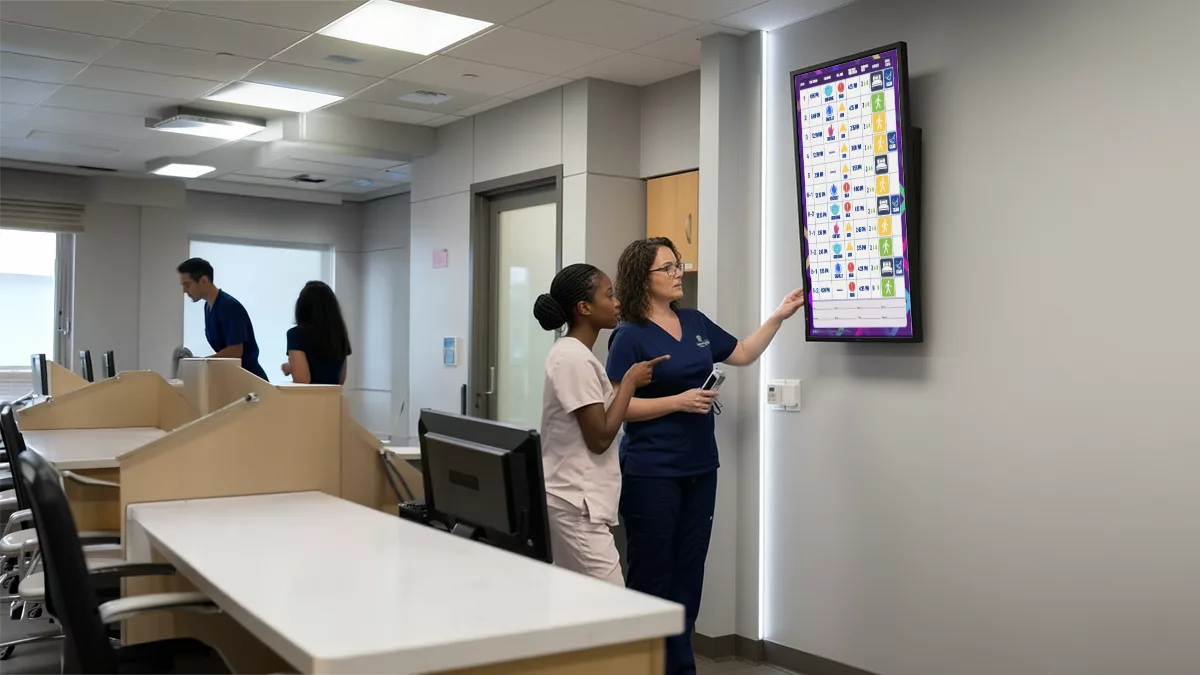
Customizable patient whiteboards remain a cornerstone of clinical communication. Available as analog boards or digital patient whiteboards, these tools serve as a reliable, central hub of truth during complex shift changes. When a new nurse or physician enters the room, the whiteboard provides immediate context regarding the patient’s status. Dry erase patient room whiteboards can also complement Electronic Health Records (EHRs) by displaying and helping to store patient information in a visible, accessible way for the care team, supporting the centralization of key medical data and improving patient outcomes.
Enhancing Collaboration
Clear visual cues minimize confusion among physicians, nurses, other physicians, and visiting family members. Standardized boards that display current pain scales, assigned care teams, and daily goals ensure everyone—including the entire health care team—remains on the same page. If you are researching how to improve patient outcomes, enhancing basic communication through these visual aids is a highly effective starting point. Strong collaboration among the health care team, with multidisciplinary teamwork and peer support, prevents critical information from slipping through the cracks during busy handoffs. Additionally, implementing patient-centered care frameworks should address social determinants of health, such as living conditions and education opportunities, to improve health outcomes and reduce disparities.
Cost-Effective Innovation
Patient whiteboards represent a simple, user-friendly tool that yields a high return on investment. Interchangeable patient board graphics require minimal staff training to implement and use effectively. Framing these visual communication strategies as a cost-effective innovation helps administrators secure budget approvals easily. They offer a highly visible, practical solution that enhances patient safety without requiring massive overhauls to existing IT infrastructure. By supporting better communication and engagement, these strategies contribute to improved outcomes for patients and a strong ROI for healthcare facilities.
Integrating Electronic Health Records for Smarter Staffing
When we talk about Electronic Health Records, we’re really talking about one of healthcare’s most powerful tools for keeping you and your loved ones safer. Think of EHRs as your healthcare team’s trusted companion—instantly connecting every doctor, nurse, and specialist with the complete picture of your health story. We love how this technology works behind the scenes to catch potential issues before they become problems, dramatically reducing those medical errors that used to worry so many of us. What’s truly empowering is knowing that every member of your care team can make the best possible decisions about your health because they have access to the most current, comprehensive information about you. And here’s something we find especially encouraging: EHRs make it so much easier for healthcare providers to follow the latest, proven medical practices—which means you’re getting care that’s not just personalized, but also backed by the most current research and evidence.
Streamlining Documentation
Think of EHRs as your trusted companion in streamlining documentation—they’re here to make your daily workflow feel less overwhelming and more manageable. Instead of getting bogged down in endless paperwork (we’ve all been there!), you can rely on smart automated features that help you capture patient information quickly and accurately. It’s like having a reliable assistant that never makes those frustrating documentation errors, giving you confidence in your data quality. With this streamlined approach, you’ll find yourself able to:
- Track your patients’ journeys over time with clarity and ease
- Spot meaningful trends and opportunities for even better care
- Craft treatment plans that truly make a difference
Here’s what we love most about this: when documentation becomes effortless, you get to focus on what drew you to healthcare in the first place—building meaningful connections with your patients and delivering the exceptional care that makes a real impact on their lives.
Real-Time Data for Staffing Decisions
Think of EHRs as your trusted companion in the world of healthcare data—they’re like having a knowledgeable friend who never sleeps, constantly gathering real-time insights for you. As a healthcare administrator, you can dive into this treasure trove of patient volume, acuity levels, and staffing information to make those crucial scheduling decisions with confidence. This friendly, data-driven approach becomes your guide to:
- Fine-tuning your staffing levels so they perfectly match what your patients truly need
- Creating smoother patient experiences by cutting down those frustrating wait times
- Building smart, forward-thinking care plans that actually reflect what’s happening right now
Here’s where things get really exciting: with these real-time insights flowing in, you and your team can almost predict the future—anticipating shifts in patient needs before they happen and adjusting your staffing like a well-choreographed dance. It’s this kind of thoughtful preparation that ensures every patient gets the timely, caring attention they deserve, while your entire healthcare system hums along more efficiently than ever before.

Fostering Interdisciplinary Care Teams
Here’s something we know makes all the difference in healthcare: when different experts come together as a team, magic happens for patients. Think of interdisciplinary care teams as your personal healthcare dream team—we’re talking about physicians, nurses, pharmacists, and therapists who put their heads together, each bringing their unique expertise to create a care plan that’s completely tailored to you. It’s like having a knowledgeable friend in every specialty working together behind the scenes, making sure nothing falls through the cracks and your care feels seamless from start to finish. When we work this way, patients see better outcomes because everyone’s on the same page, communicating clearly, and focused on what matters most—your health and wellbeing.
Coordinating Across Roles
We know that bringing care team members together effectively is the heart of delivering truly excellent patient care. When interdisciplinary teams tap into EHRs, here’s how they create that seamless coordination we all want to see:
- Share patient information and care plans as they happen, in real time
- Keep everyone in the loop about changes in patient status
- Spot and tackle potential gaps in care before they become problems
This kind of thoughtful coordination does something really powerful—it helps us close those communication gaps that can slip through the cracks, prevents the medical errors we all worry about, and creates a much safer environment for patients. When every single person on the care team can access the same up-to-date information, we’re able to deliver the kind of patient-centered care that truly makes a difference in outcomes and leaves patients feeling genuinely satisfied with their experience.
By building strong interdisciplinary care teams and making the most of EHR technology, we can ensure that patients receive the best possible care—and we mean that, every single step of the way.
Combating Burnout to Improve Patient Outcomes
Nurse Satisfaction
There is a direct correlation between staff satisfaction and patient satisfaction. Stressed, exhausted nurses cannot deliver the highest standard of care, regardless of their individual dedication. When facilities fail to support their teams with adequate staffing and efficient tools, burnout rates skyrocket. Retaining experienced nursing staff is vital for maintaining a high quality of care, making burnout prevention a top priority for clinical leaders.
Managing chronic disease and addressing socioeconomic status are also essential for supporting nurses and improving patient outcomes, as these factors can significantly impact nurse workload and patient care demands. Patient-centered care (PCC) models that prioritize patients’ values, preferences, and life circumstances—including chronic disease management and socioeconomic status—can lead to improved health outcomes across various specialties.
Removing Administrative Friction
Combining predictable labor models with intuitive technology removes heavy administrative burdens from the nursing staff. Seamless integrations that automate documentation or provide quick access to patient data alleviate daily friction. Incorporating continuous improvement and quality improvement methodologies—such as ongoing evaluation and structured process changes—ensures that clinical practices are always evolving to enhance patient outcomes. When healthcare professionals spend less time wrestling with inefficient software or hunting down schedules, they experience higher job satisfaction. Happy, well-supported nurses provide better care, directly driving healthcare improvement across the facility.
Targeting Readmissions
Well-supported staff have the time required to ensure proper discharge planning. Rushed discharges often lead to patient confusion regarding post-care instructions, which inevitably results in a return trip to the hospital. When nurses have the bandwidth to educate patients thoroughly, they close the feedback loop effectively. Targeting readmissions through comprehensive discharge education is a proven method for improving clinical outcomes and securing the long-term financial stability of the hospital.
Next Steps for Optimizing Clinical Workflows
Healthcare improvement requires a dedicated, dual-focused approach. Facilities must predict labor needs accurately while simultaneously equipping their staff with the right communication tools. Balancing the schedule ensures enough nurses are present, while technologies like IPC systems and patient whiteboards ensure those nurses can work as efficiently as possible.
These integrated strategies offer a clear path to cost-effective innovation, improved ROI, and verifiable quality of care. Prioritizing health equity and leveraging healthcare research are essential for driving ongoing improvements in care delivery—helping address disparities, inform best practices, and ensure all patients receive high-quality care regardless of background or location. Hospital administrators who focus on smart staffing, bedside technology, and equitable access create a safer, more supportive environment for everyone involved.
We encourage healthcare leaders to evaluate their current workflow tools and scheduling methodologies. Schedule a consultation with our team today to explore customizable, HIPAA-compliant solutions designed to enhance staff efficiency and deliver the highest standard of patient care.