
Digital vs. Analog Patient Communication Boards
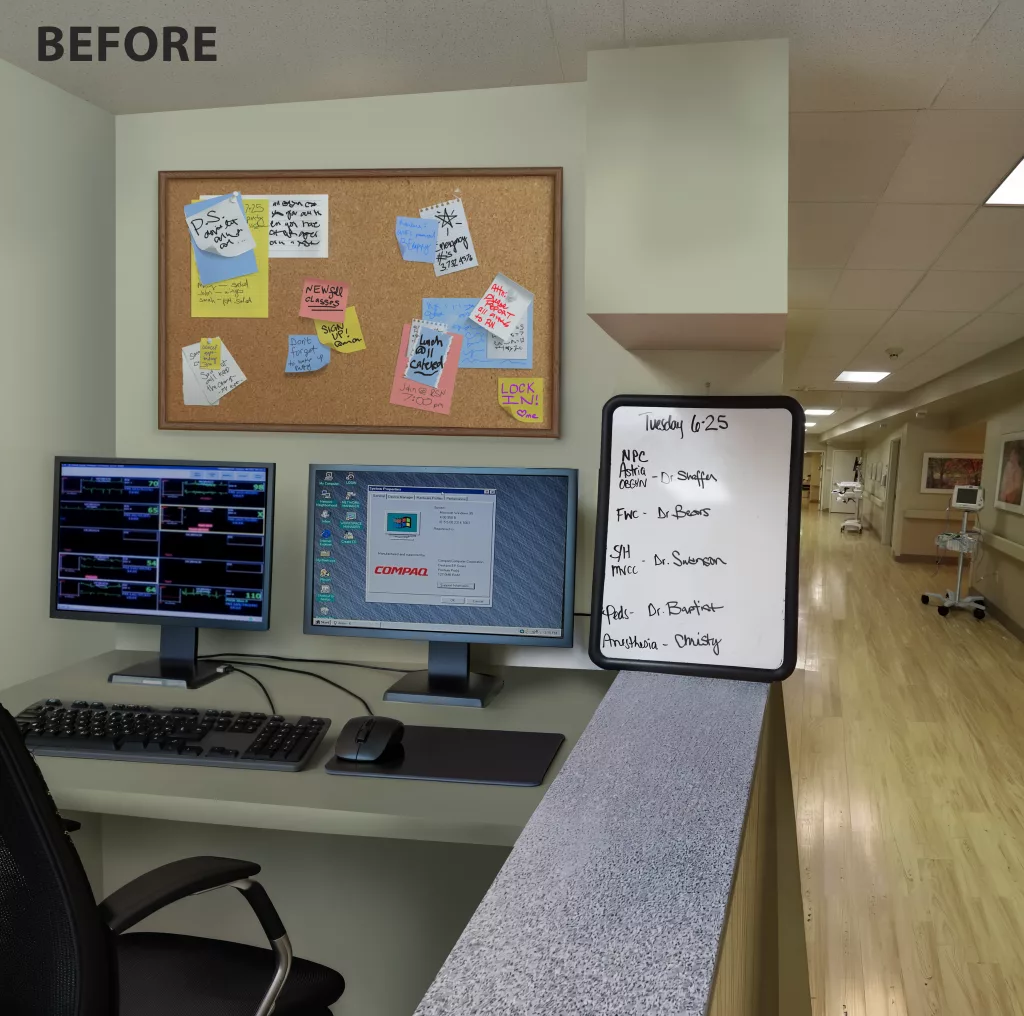
Picture a plain dry-erase board at the foot of a hospital bed. The care team name is two shifts out of date. The discharge target has been crossed out twice. A smudge covers half the day’s goals. The patient squints, gives up, and presses the call light to ask the same question a nurse has already answered three times today. This scenario highlights how poor communication tools can negatively impact patient outcomes by causing confusion and frustration.
That board was supposed to keep patients informed. Instead, it adds work and erodes trust. If you lead a nursing team or manage hospital operations, you face a practical choice: upgrade to a custom analog whiteboards or move to digital patient communication boards. Let’s compares the two across features, workflow, accessibility, cost, and adoption—so you can decide with confidence.
One principle anchors everything here. Whichever option you choose, the board supports your nurses and patients. This guidance draws on helping hospital teams evaluate bedside communication tools.
The Job a Patient Experience Communication Board Should Do
Before comparing options, agree on the goal. Every board—analog or digital—exists to keep patients informed about their care team, daily goals, schedules, and discharge milestones. Its real value is closing the communication gaps that frustrate patients and pull nurses away from care.
Effective communication in healthcare plays a critical role in improving patient outcomes and satisfaction levels. Communication boards serve as a vital tool to engage patients actively in their care by providing clear, consistent information that supports treatment adherence. When patients understand their care plans, medications, and instructions, they are more likely to follow through, which positively impacts recovery and reduces complications. Additionally, factors such as patient engagement and socioeconomic conditions influence outcomes, making accessible and timely communication through these boards essential to address diverse patient needs and improve overall health results.
That work connects directly to outcomes. Clear communication drives engagement, understanding, and satisfaction. National guidance treats patient and family engagement as a core safety and quality priority, not an extra (AHRQ). Communication quality also feeds straight into the measures tied to your reputation and reimbursement (CMS HCAHPS).
And the decision belongs to your team. Nurses know exactly where communication breaks down on the floor. Their input should shape the choice between custom analog and digital.
Start here: List the three pieces of information patients most need at the bedside. That becomes your comparison benchmark.
Analog Boards: Honest Strengths and Practical Considerations for Your Care Teams
Analog whiteboards have long been valued for their simplicity and low upfront cost. Unlike plain blank whiteboards that require rebuilding structure each time, a custom analog patient board comes pre-designed with structured sections tailored to patient communication needs. This thoughtful layout ensures consistency and clarity, making it easier for care teams to update and patients to understand. They require no training, no integration, and no recovery plan when the network goes down. Any team member can update one quickly, and the format is familiar to everyone.
However, there are some practical considerations. Information can become outdated if updates are missed, handwriting may be difficult to read, and limited space means choices must be made about what to display. They do not connect to the EHR, lack an audit trail, and offer limited accessibility features for patients who may need them.
An important factor to consider is the time nurses spend updating the boards each shift and addressing questions that arise when information isn’t current. While the initial purchase price is low, the ongoing time investment from nursing staff is worth recognizing.
Try this: Track how often boards on one unit are updated during a single shift to better understand the maintenance involved.
Digital Boards: Strengths and Tradeoffs in Care Experience
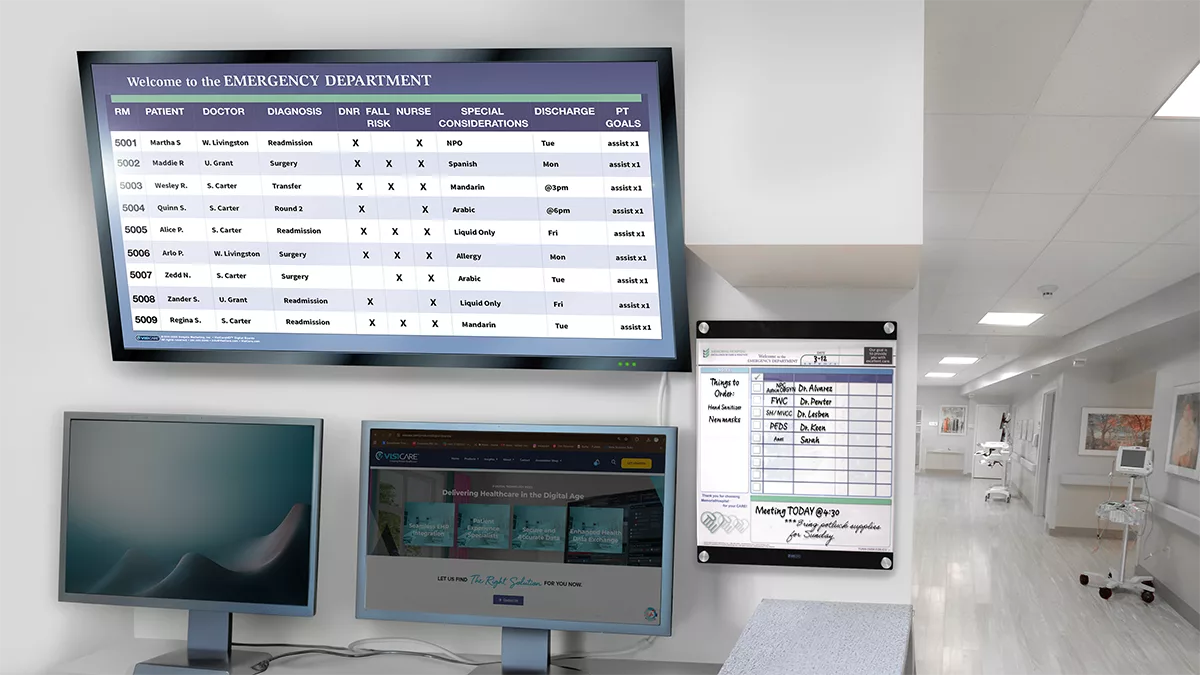
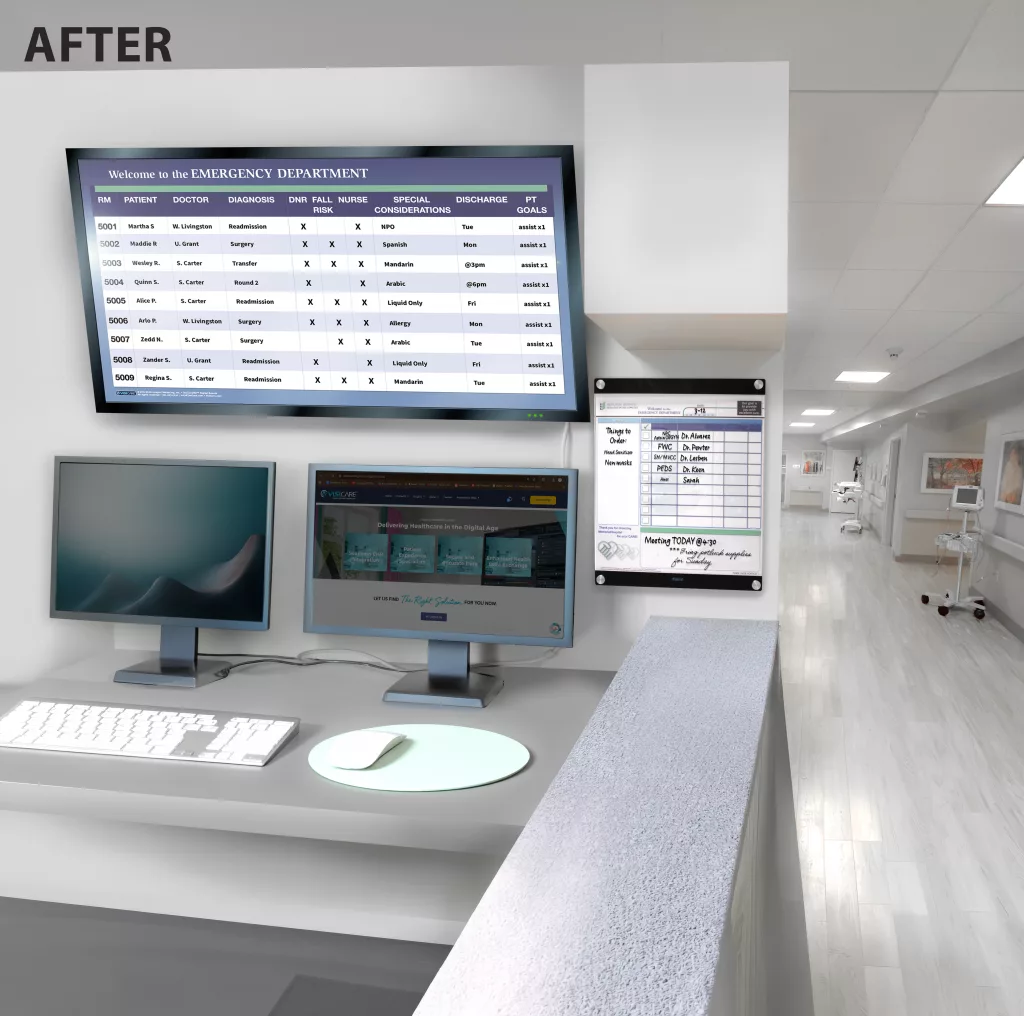
Digital boards solve the staleness problem directly. They deliver real-time updates, clean legibility, and care-plan visibility that stays current. Integration with the EHR and call system means the board reflects decisions your team has already made—no double entry required. Interactive features let patients see their schedule and submit non-urgent requests on their own.
The tradeoffs are real, and worth naming plainly. Digital boards carry a higher upfront cost, require integration work and training, and depend on power and network uptime. A clear-eyed view of both sides helps you choose well, rather than assuming newer always means better.
The principle holds here too. Interactive patient care systems flag, display, and remind. Your nurses and care team decide.
Map it: Identify which routine updates a digital board could automate to free nurse time for direct care.
Side-by-Side Comparison
Here’s how the two stack up across the factors that matter most.
Features
- Analog: static, manual, single-language, no integration.
- Digital: real-time, automated, multilingual, EHR-connected.
Workflow impact
- Analog: manual rewriting each shift; updates easily missed.
- Digital: automated updates cut repetitive tasks and ease call-light volume for non-urgent needs.
Accessibility
- Analog: limited by handwriting and a fixed layout.
- Digital: adjustable text size, multiple languages, and simpler navigation for older adults and patients with limited mobility. This aligns with federal accessibility expectations (Section 508).
Cost
- Analog: low purchase price, higher ongoing staff time.
- Digital: higher upfront and integration cost, offset by efficiency gains and clearer measurement.
Adoption
- Analog: immediate, no training.
- Digital: depends on intuitive design, short role-specific training, and frontline involvement.
Make it concrete: Score each row against your unit’s priorities to see which option fits your goals.
Where Smart Patient Room Technology Fits
A digital board rarely works alone. In a connected room, it sits alongside the call system and EHR to keep information current and consistent. This is smart patient room technology in practice—and your nurses still control what appears and when.
The point is connected care, not automated care. Integration reduces double documentation and surfaces prompts—pain reassessment, rounding—that nurses confirm and act on. Established standards tie clear communication directly to safety and care quality (The Joint Commission). And engagement isn’t soft: research links higher patient activation to better outcomes and lower costs (Health Affairs).
Walk it: Step into one patient room and map what a connected board could keep current automatically.
Choosing the Best Interactive Patient Engagement Care Platform
If you decide to go digital, a consistent process keeps vendor hype in check. Use these five criteria to compare options on equal footing.
1. Start with goals and your nurses. Define the outcomes you want—higher HCAHPS communication scores, lower non-urgent call-light volume, smoother discharges. Bring frontline nurses into the selection early. Their buy-in drives adoption later.
2. Confirm integration and workflow fit. Prioritize seamless integration with your EHR and existing systems to avoid disruption and double documentation. Make sure the platform scales across your facility, whether you run 100 beds or 1,000.
3. Weigh usability and adoption. Favor intuitive, user-friendly interfaces that need minimal training for staff and patients alike. A tool that adds clicks won’t survive a busy shift.
4. Verify compliance and security. Confirm HIPAA alignment and data protection before you sign anything. This protects patients and shields your facility from costly exposure (HHS HIPAA guidance).
5. Evaluate vendor support and scalability. Look hard at reputation, customization, implementation support, and long-term scalability. The right partner stays with you well past install day.
Make it concrete: Build a short scorecard from these five criteria so every option gets judged the same way.
Patient Care Boards Best-Practices Checklist
Keep this short list close as you move forward:
- Define the information patients most need at the bedside.
- Weigh analog and digital honestly against cost, workflow, and accessibility.
- Set outcome goals with nurse input.
- Confirm EHR and smart room technology integration.
- Prioritize usability for staff and patients.
- Verify HIPAA compliance and data security.
- Plan training and name unit champions.
- Track baseline metrics and review them regularly.
- Keep clinical judgment—not the board—at the center.
Empowering Patients and their Outcomes
The contrast is clear. Analog boards are simple and low-cost, but lean hard on nurse time and go stale fast. Digital boards offer real-time clarity, accessibility, and measurable gains—at the price of upfront cost and integration work. Each carries tradeoffs.
Whichever you choose, the board succeeds when it supports skilled nurses and engaged patients, never when it stands in for clinical judgment. Frontline involvement, clear goals, and an honest cost comparison drive the right decision. Start with your unit’s biggest communication gap, and let that guide the choice.
To see how interactive patient care can support your nurses and patients—and where digital boards fit your facility—explore the approach and resources at VisiCare.com, built around your team, never in place of it.