
Room to Improve: Designing Patient Rooms That Boost HCAHPS Scores
TLDR: Thoughtfully designed patient rooms—equipped with structured communication tools like patient whiteboards and medical dry erase boards—can reduce falls , cut medication errors, and directly raise HCAHPS scores tied to Medicare reimbursement. This post walks hospital administrators through a four-step framework to audit, implement, train, and measure patient room communication improvements.
Facilities with well-designed patient rooms report fall reductions, measurable decreases in medication errors, and shorter average lengths of stay. Under value-based care models, those outcomes translate directly into HCAHPS score improvements—and by extension, Medicare reimbursement. That’s not a design conversation. It’s a financial and clinical one.
Yet hospital administrators face a difficult convergence of pressures: constrained capital budgets, rapidly rising patient expectations, and growing regulatory scrutiny from The Joint Commission and CMS. All of it lands in the same room—literally. The patient room has become the single most important physical asset a hospital manages, and most facilities are underutilizing it.
If you’ve read our earlier piece, Healing by Design: How Hospital Spaces Shape Patient Recovery, you already understand how Evidence-Based Design principles connect the built environment to clinical outcomes. This post builds on that foundation with a practical, implementation-focused lens. Here, you’ll find a structured audit process, guidance on selecting the right communication solutions—including medical dry erase boards and patient whiteboards—staff training best practices, and a feedback framework for continuous improvement.
The goal is straightforward: give your leadership team a repeatable process for turning patient room design into a measurable driver of patient satisfaction and quality of care.
Why Patient Room Design Is a Clinical and Operational Priority
Patient room design is not interior decorating. Every decision—from sightline positioning to the presence or absence of a patient whiteboard—affects how safely and confidently a patient navigates their stay.
Research in Evidence-Based Design consistently links natural light, controlled noise levels, room layout, and structured communication tools to faster recovery times, reduced incident rates, and stronger patient safety outcomes. Patients in well-designed rooms report feeling more informed, more involved in their care, and more satisfied with staff responsiveness. Each of those perceptions feeds directly into HCAHPS domain scores.
HCAHPS surveys ask patients to rate communication with nurses, staff responsiveness, clarity of information about medications, and overall hospital experience. Patients don’t separate how the room functions from how care was delivered—in their minds, the environment and the experience are the same thing. A cluttered whiteboard, a malfunctioning call light, or a care plan that was never visibly communicated all register as failures of care coordination, not failures of design.
Improving patient outcomes in hospitals, therefore, begins with the environment patients spend the most time in. For a deeper grounding in EBD principles, revisit Healing by Design. What follows is the actionable next step.
Step 1 — How to Audit Current Patient Room Layouts and Communication Gaps
No improvement initiative has a measurable direction without a baseline. A structured room audit is the non-negotiable starting point—and it needs to go beyond a facility walkthrough.
A thorough audit covers four areas:
Layout assessment: Are sightlines clear from the patient bed to the room door? Can patients reach call buttons and personal items without staff assistance? Does the room meet ADA compliance standards? These aren’t just comfort questions—they’re patient safety questions.
Lighting and acoustics review: Does the room receive adequate natural light across day and night cycles? What are average noise levels during peak shift hours? Sound-absorbing materials and appropriate lighting directly affect sleep quality, pain perception, and patient-reported satisfaction.
Communication tool inventory: Are patient whiteboards present in every room? Are they standardized in layout, consistently updated, and mounted at eye level from the patient’s bed? Do they display allergy flags, fall risk status, care team contacts, and daily goals? An empty or outdated whiteboard signals to patients that no one is managing their plan—even when they are.
Care coordination gaps: Are there documented handoff failures or medication reconciliation errors that a structured communication system could reduce? Reducing medical errors through patient communication is one of the highest-leverage outcomes your audit can surface.
Critically, clinical staff and nursing leadership should be part of the audit process. Frontline nurses identify workflow friction points that administrators miss during walkthroughs. Infection control teams can flag hygiene risks tied to existing board surfaces.
Don’t overlook your HCAHPS comment fields. Recurring design-related complaints—patients reporting they didn’t know who their nurse was, or couldn’t find discharge information—are a direct audit source. Mine them systematically.
Suggested patient room audit checklist:
- Clear sightlines from bed to door
- ADA-compliant room layout
- Adequate natural light; controlled noise levels
- Patient whiteboard present and mounted at eye level
- Whiteboard consistently updated each shift
- Allergy flags, fall risk status, and care team names displayed
- Daily goals and discharge milestones visible
- Call light within independent reach of patient
- Documented handoff protocol in place
- HCAHPS comment fields reviewed for design complaints
Step 2 — How to Select and Integrate the Right Communication Solutions for Patient Rooms
Communication tools—particularly patient whiteboards and medical dry erase boards—function as patient safety infrastructure. The Joint Commission recognizes structured patient communication as a key safety standard. That framing matters when making the case to hospital leadership: these are not optional upgrades.
Patient Whiteboards: The Point-of-Care Communication Hub
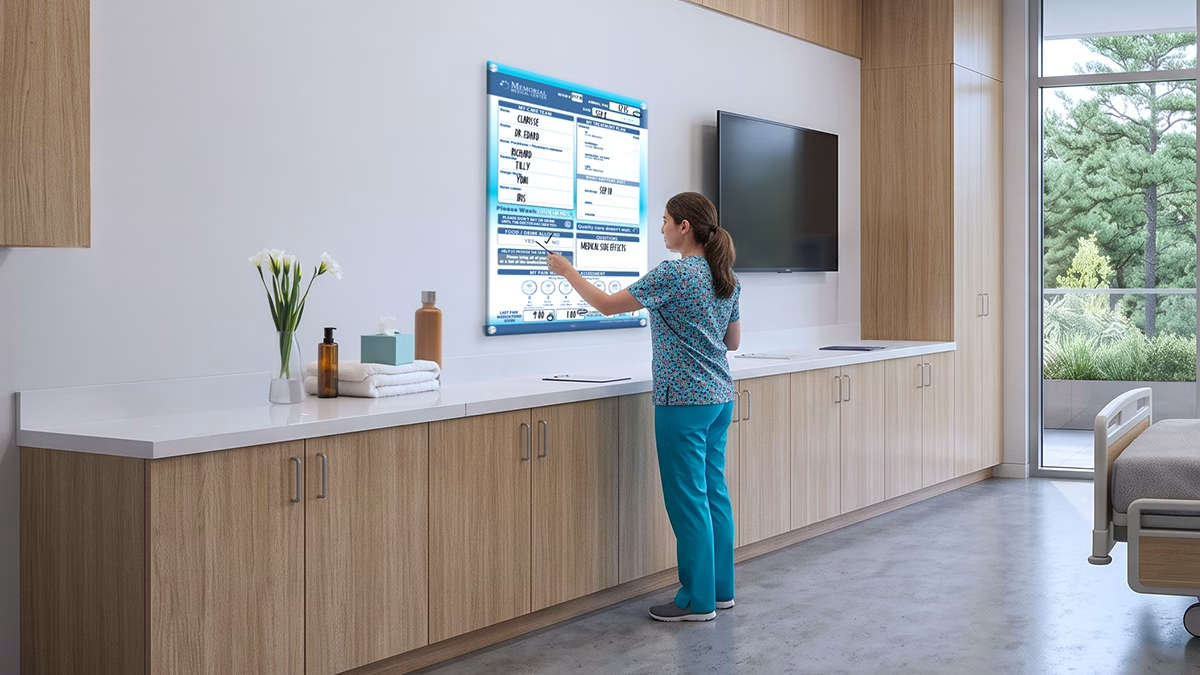
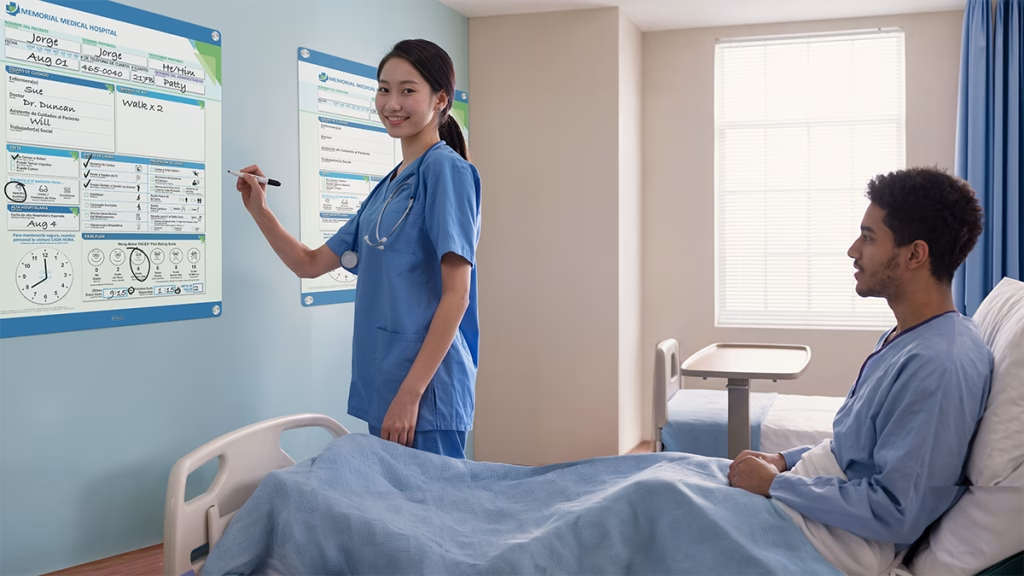
A properly implemented patient whiteboard serves as the real-time information anchor for the patient’s entire stay. At any moment, it should display: care team names and roles, daily goals, current care plan milestones, medication schedules, pain levels, discharge targets, fall risk status, and allergy flags.
Research supports a direct relationship between consistent whiteboard use and reduced call light frequency. When patients can see their plan without needing to ask, they feel informed—and that perception translates into measurable improvements in nurse-patient communication domain scores on HCAHPS surveys. The whiteboard is a low-cost, high-impact lever for patient satisfaction that many facilities still underutilize.
Feature considerations matter here: antimicrobial coatings support infection control goals, HIPAA-compliant printed template layouts reduce documentation inconsistency, and magnetic surfaces allow care teams to attach supplemental documents.
Nurse Communication Boards: Unit-Level Care Coordination
Where patient whiteboards operate at the individual room level, nurse communication boards function across the unit. They track assignments, flag high-acuity patients, and support structured shift handoffs. Documented outcomes from unit-level boards include fewer medication errors during transitions, faster response times to patient needs, and stronger staff accountability across care teams.
Both types of medical dry erase boards feed directly into the care coordination and nurse-patient communication domains that drive HCAHPS scoring.
Hybrid Analog and Digital Approaches
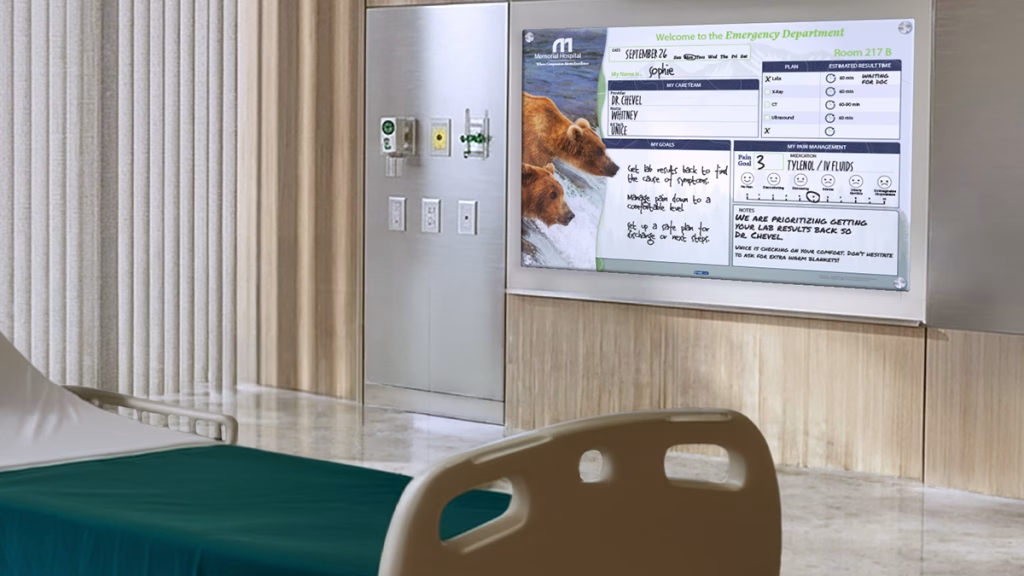
Facilities sit at different points on the technology adoption curve. A hybrid approach—pairing analog communication boards with EHR-integrated digital displays—allows hospitals to improve communication without waiting for full digital transformation. VisiCare’s VisiCareHD™ Digital Boards, for example, support EHR integration for facilities ready for a tech-forward solution, while the full range of analog boards serves units where simplicity, durability, and cost-effectiveness take priority.
Customization by unit type is equally important. Pediatric units need boards with accessible language and visual cues for family members. Oncology units require space for complex care plan milestones. Geriatric and MedSurg units each carry their own communication requirements. Solutions to improve patient satisfaction must match the patient population—a generic catalog product rarely does.
A common concern worth addressing directly: “Integration will disrupt current workflows.” Well-designed communication boards require minimal staff training and are built to complement existing systems. The disruption of implementation is consistently outweighed by the reduction in handoff errors and call light volume within the first few weeks of adoption.
Step 3 — How to Train Staff on Patient Room Communication Best Practices
Patient outcome improvement tools only deliver ROI when staff use them correctly and habitually. Even the most well-designed patient whiteboard fails without consistent adoption. Training is where most facilities leave value on the table.
A practical framework includes four elements:
Standardize whiteboard protocols: Define exactly what information belongs in each section of the board, who is responsible for updating it, and at what frequency—shift start, post-rounds, and pre-discharge. Ambiguity in protocol is the primary cause of inconsistent whiteboard use.
Role-specific training: Nurses, care assistants, hospitalists, and unit managers each interact with communication boards differently. Training should reflect those differences rather than defaulting to a single generic session.
Connect the “why” to outcomes: Staff who understand that a consistently updated patient whiteboard directly reduces call light frequency, medication errors, and dissatisfaction scores are more likely to maintain the habit under pressure. Link whiteboard compliance to HCAHPS domain performance explicitly during training.
Onboard new staff systematically: Whiteboard protocols should be embedded in orientation—not treated as secondary procedures discovered weeks into a new role.
Leadership accountability reinforces all of the above. Unit managers who audit whiteboard completeness during rounds signal that this standard matters. What gets observed consistently gets done consistently. The HCAHPS communication with nurses domain is one of the survey’s highest-weighted sections—trained, protocol-consistent teams score measurably higher than those operating without standards.
Step 4 — How to Monitor, Measure, and Iterate Based on Patient Feedback
A one-time implementation is not a strategy. Sustained improvement in patient satisfaction and quality of care requires a structured feedback and iteration loop, reviewed on a consistent cadence.
Key data sources to monitor include:
- HCAHPS survey results: Track domain-specific scores—communication, responsiveness, cleanliness, overall experience—before and after design or tool changes. Isolate variables where possible to understand which interventions are driving score movement.
- Call light frequency data: A measurable reduction in call light use is one of the most reliable proxies for patient whiteboard effectiveness. If patients are calling less, they’re finding answers on the board.
- Incident and error reports: Medication errors, fall incidents, and handoff failures all serve as communication tool performance indicators. Reductions in these metrics constitute a business case for continued investment.
- Direct patient feedback: Rounding conversations, comment cards, and post-discharge surveys surface qualitative data that HCAHPS scores alone don’t capture. A patient who felt informed during their stay will say so in their own words.
- Staff feedback: Frontline nurses and care assistants are the first to identify when a protocol isn’t working as intended. Build structured channels for that feedback into your quarterly review.
The ROI dimension deserves deliberate attention. Mapping design investments to measurable outcomes—reduced length of stay, lower call light volume, higher reimbursement from improved HCAHPS scores—creates the business case executive stakeholders need to justify continued or expanded investment.
Facilities should plan a quarterly review cadence for communication tool performance, connecting findings directly to tools to increase patient satisfaction scores and reporting those results to operational and clinical leadership.
One practical note: work with a vendor partner that offers scalable, updatable solutions. Facilities expand, protocols evolve, and patient populations shift. The best communication strategy for better patient outcomes accounts for that change rather than assuming a static installation is sufficient.
Build the Patient Room That Builds Your Scores
Patient room design is not a capital expenditure to defer—it is a direct lever for improving patient outcomes, raising HCAHPS scores, and reducing operational costs. The facilities leading in patient satisfaction are not necessarily those with the largest renovation budgets. They are the ones that have made deliberate, evidence-based decisions about how their rooms communicate care to every patient, every shift.
The four-step framework is straightforward to execute:
- Audit current room layouts and communication gaps
- Select and integrate the right communication solutions for your unit types
- Train staff on consistent, role-specific best practices
- Monitor and iterate based on HCAHPS results, call light data, and direct patient feedback
Each step builds on the last. Together, they create a continuous improvement system that compounds over time.
VisiCare’s custom patient room solutions—including medical dry erase boards, patient whiteboards, nurse communication boards, and EHR-integrated digital boards—are designed to support that system at every stage. Request a consultation at VisiCare.com to assess your facility’s current communication gaps and identify the right solution for your patient population.
Frequently Asked Questions
How do patient whiteboards improve HCAHPS scores?
Patient whiteboards improve HCAHPS scores by keeping patients informed about their care team, daily goals, medication schedules, and discharge plan—without requiring them to ask. When patients feel informed and involved, nurse-patient communication domain scores rise. Consistent whiteboard use also reduces call light frequency, a measurable proxy for patient satisfaction.
What tools are most effective for increasing patient satisfaction scores in hospitals?
The most consistently effective tools include patient whiteboards at the room level and nurse communication boards at the unit level. Both categories of medical dry erase boards support structured handoffs, reduce medication errors, and give patients visible access to their care plan. Digital boards integrated with EHR systems offer additional capabilities for tech-ready facilities.
How can hospitals reduce medical errors through patient communication?
Standardized communication boards reduce medication errors by maintaining visible, up-to-date care information during shift transitions—when most reconciliation errors occur. Unit-level nurse communication boards support structured handoffs with assigned roles and flagged high-acuity patients, reducing the information gaps that lead to adverse events.
How do you improve patient outcomes in hospitals without a large capital budget?
Medical dry erase boards and patient whiteboards deliver measurable improvements in patient outcomes at a significantly lower cost than digital systems or structural renovations. Starting with a thorough room audit, standardizing communication protocols, and training staff consistently produces HCAHPS score improvements that justify further investment over time.
What is the ROI of investing in patient room communication solutions?
ROI from patient communication tools comes from multiple directions: reduced call light volume lowers nursing burden, improved HCAHPS scores protect value-based care reimbursement, and fewer medication errors reduce liability exposure and readmissions.