
Glass Boards vs. Blank Melamine Dry Erase Boards: Which Is Right for Your Hospital?
Every patient room already has a board on the wall. The real question is whether that board is doing its job—or just taking up space.
For nurse leaders and patient experience teams, that single wall does a lot of heavy lifting. It tells patients who’s on their care team. It reminds families of the day’s plan. It flags fall risks, discharge dates, and pain goals. When the board works, communication flows and trust grows. When it fails, gaps open up, and those gaps show up in your satisfaction scores.
So before you sign off on the next round of Medical dry erase boards, it’s worth slowing down. Choosing between melamine and Hospital Glass Boards isn’t a small supply order. It’s a procurement decision that shapes staff workflow, infection control, and patient care for years. Let’s break down exactly what separates the two—and which one earns its place in your rooms.
What’s the Real Difference Between Melamine and Glass?
Start with the basics, because the two surfaces are not created equal.
Melamine patient whiteboards are the familiar option. They’re affordable, widely available, and easy to hang. Most hospitals have used them for decades. The catch? Melamine is a coated pressed-wood surface with a limited working life. Under constant use and daily cleaning, it wears down faster than most teams expect.
Hospital glass boards use a tempered glass surface built for heavy, repeated use. They look sleek, resist wear, and hold up under the demands of a busy clinical environment. Because the surface is non-porous, it stays cleaner and clearer over time.
Both can function as In-room communication boards. Both give staff a place to write updates. But performance, lifespan, and long-term value tell very different stories.
Durability: Which Board Survives Real Hospital Staff Use?
Walk any unit and you’ll spot the problem with older melamine boards. Ghosting. Staining. Faint shadows where a marker sat too long. That gray haze looks worn. It makes the board harder to read, which defeats the entire purpose.
Melamine surfaces break down with repeated cleaning. The more you disinfect, the faster the coating fades. Within a couple of years, many boards need replacing.
Hospital Glass Boards tell a different story. Tempered glass resists scratches, stains, and permanent marker shadow. Wipe it clean and it looks new again—shift after shift, year after year. A quality glass board can outlast several melamine replacements in the same window of time.
That longevity ties straight to your budget. Fewer replacements mean lower long-term costs and less staff time spent chasing down new boards. For procurement teams weighing reliable, scalable investments, durability is where glass starts pulling ahead.
Customization: Displaying Critical Information—A Blank Wall vs. a Purpose-Built Care Tool for the Patient Room
Here’s a common scene. A blank melamine board goes up, and each nurse draws their own grid. One room lists the care team on the left. The next lists it on the right. A third skips it entirely. Consistency disappears, and so does the speed that comes with knowing exactly where to look.
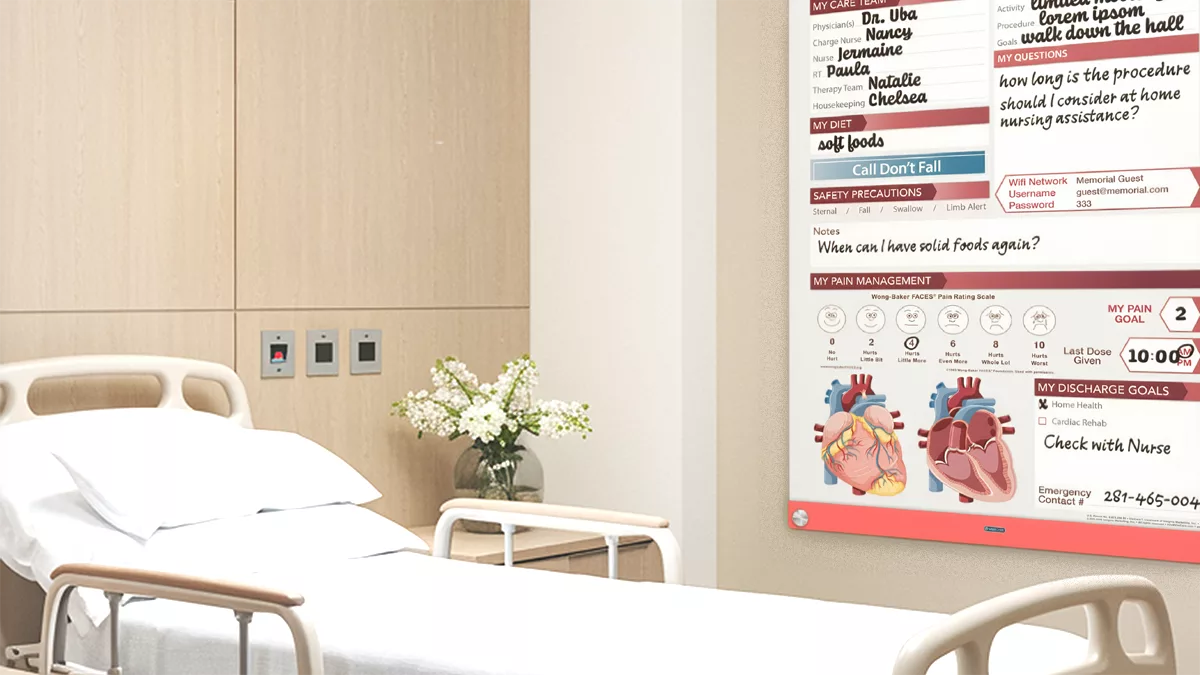
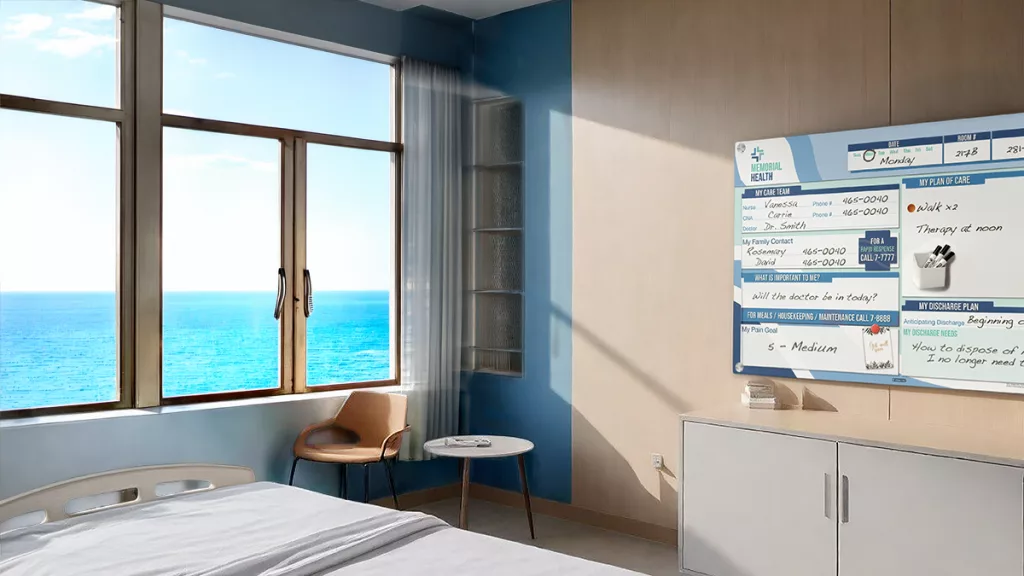
Custom hospital patient whiteboards solve that problem before it starts. Pre-printed care fields, safety prompts, discharge sections, and standardized layouts can include care team names and photos, pain levels, mobility status, and patient goals, giving every room the same clear structure. Staff update boards faster because the format never changes. Auditors review them quicker. Patients understand those printed fields at a glance because the same information appears in the same place every time.
Glass supports this beautifully. Vivid, permanently printed templates and graphics stay put—they won’t wipe away with the daily updates. The visually enhanced layout improves readability, so you get a care tool designed specifically for hospital communication instead of a blank wall waiting for someone to organize it.
Customization also lets you create layouts that match your facility’s branding and workflow, so the board reflects how your teams actually work. That’s the difference between a fixture and a functional part of care delivery.
Infection Control: The Surface That Keeps Rooms Safer
Cleanability isn’t a nice-to-have in a hospital. It’s a requirement.
Melamine’s porous coating can trap residue over time. As the surface wears, full disinfection gets harder, and worn boards become one more variable in an environment where variables matter.
Glass wins here without much debate. The non-porous, seamless entire surface easily wipes down cleanly with standard hospital disinfectants, so the entire surface stays simpler to disinfect. For routine cleaning, staff can use a disinfectant wipe or alcohol. Nothing soaks in. Nothing lingers. That makes glass a natural fit for facilities focused on infection control and material safety standards.
If you want the flexibility of magnets alongside a clean surface, Magnetic medical whiteboards for hospitals built on glass give you both—functional accessories plus a surface that meets the hygiene expectations of clinical settings. When needed, use a soft cloth for non-abrasive wiping.

Cost: Reading the Full Price, Not Just the Sticker
Let’s be honest about money, because every procurement decision comes down to it.
Melamine wins on upfront price. It’s cheaper to buy, plain and simple. If sticker cost were the only factor, the conversation would end there.
But smart procurement reads the full price. Factor in replacement frequency, the staff time lost to messy or unreadable boards, and the consistency you gain from a durable, standardized surface. Over a five- to ten-year window, the math often flips in favor of glass.
Think of it as total cost of ownership rather than a one-time purchase. A single glass board that lasts a decade can cost less than the string of melamine replacements it outlives—while delivering a clearer, cleaner communication tool the entire time.
When your team is ready to Buy hospital patient whiteboards, specifying the right surface up front protects both your budget and your outcomes.
Patient Communication Impact: Supporting Patient Goals Where Boards Earn Their Keep
This is the part that matters most. A board isn’t about the wall—it’s about the person in the bed.
A clear, readable Patient Whiteboard cuts confusion about the care team, the day’s goals, and the discharge plan. Patients who understand their care feel more in control. Families stay informed. Staff spend less time answering the same questions and more time delivering care.
Consistent, well-designed Patient whiteboards support the trust and engagement that drive higher satisfaction scores. They close the communication gaps that frustrate patients and slow down teams. And when boards are easy to read and always current, that clarity shows up in how patients experience their entire stay.
Board quality is care quality made visible. A faded, disorganized board sends a quiet message. A crisp, purpose-built one sends a much better one.
Boards and the Rural Health Transformation Program
The Rural Health Transformation Program supports rural facilities as they strengthen care delivery and adopt practical, technology-enabled solutions. In plain terms, it’s about helping rural hospitals do more with the resources they have—improving communication, consistency, and patient outcomes across units that often run lean on hospital staff and budget. Some facilities also use standard room boards paired with digital whiteboards for real-time patient data visualization. Digital whiteboards can integrate with EMRs for real-time updates.
This is exactly where boards prove they’re more than fixtures. The content on a patient board is a care-delivery intervention tool. It helps display critical information such as care team names and photos, pain levels, mobility status, and dietary restrictions, while helping nurses and teams track care-plan updates and patient needs. It guides handoffs, reinforces safety protocols, and keeps patients and families oriented. When that information is standardized and reliable, it directly supports the kind of consistent, coordinated care the program aims to strengthen.
Custom hospital patient whiteboards fit that mission well. Standardized layouts mean every unit communicates the same way, which supports safer handoffs and clearer patient engagement—even when staffing is tight. And durable, low-maintenance Hospital glass boards match rural budget realities. Fewer replacements, easier upkeep, and a clear ROI make them a practical choice for facilities investing in long-term improvement.
VisiCare partners with facilities pursuing program-aligned upgrades, helping turn a simple wall board into a dependable tool for better communication and stronger patient outcomes.
Side-by-Side Summary: Which Board Is Right for You?
Here’s the quick-scan comparison your team can use to decide.
| Decision Factor | Melamine Dry Erase Boards | Hospital Glass Boards |
|---|---|---|
| Durability | Wears down, ghosting and staining over time | Tempered glass resists wear for years |
| Customization | Blank surface, inconsistent layouts | Pre-printed, standardized care fields |
| Infection Control | Porous, harder to fully disinfect over time | Non-porous, wipes clean with standard disinfectants |
| Upfront Cost | Lower sticker price | Higher initial investment |
| Long-Term Cost | Frequent replacements add up | Lasts longer, lower total cost of ownership |
| Communication Impact | Fades and varies room to room | Clear, consistent, easy to read |
Choose melamine when budget is the single deciding factor and the board sees light, occasional use.
Choose Hospital Glass Boards for high-use units, unit-wide standardization, infection control priorities, and long-term value.
Whatever you choose, the best board is the one that supports your staff’s workflow first—because a board your team actually uses is the only board that improves care.
Build Boards Your Team Will Actually Use
Your walls should work as hard as your teams do. The right board keeps care teams, patients, and families on the same page—clearly, cleanly, and consistently.
Explore VisiCare’s full range of Patient whiteboards and glass board options built for real clinical environments, helping customers choose the right fit with confidence. Nurse leaders and procurement teams can request a consultation or a custom design quote to discuss board needs and spec solutions that fit your units, your workflows, and your goals.
Ready to upgrade the most-used tool in every patient room? Visit VisiCare.com to Buy hospital patient whiteboards or contact our team today.
Better boards. Clearer care. Stronger patient trust. That’s the difference the right surface makes.